Scuba Diving in Sodwana Bay: The Complete Guide for Divers and Underwater Photographers
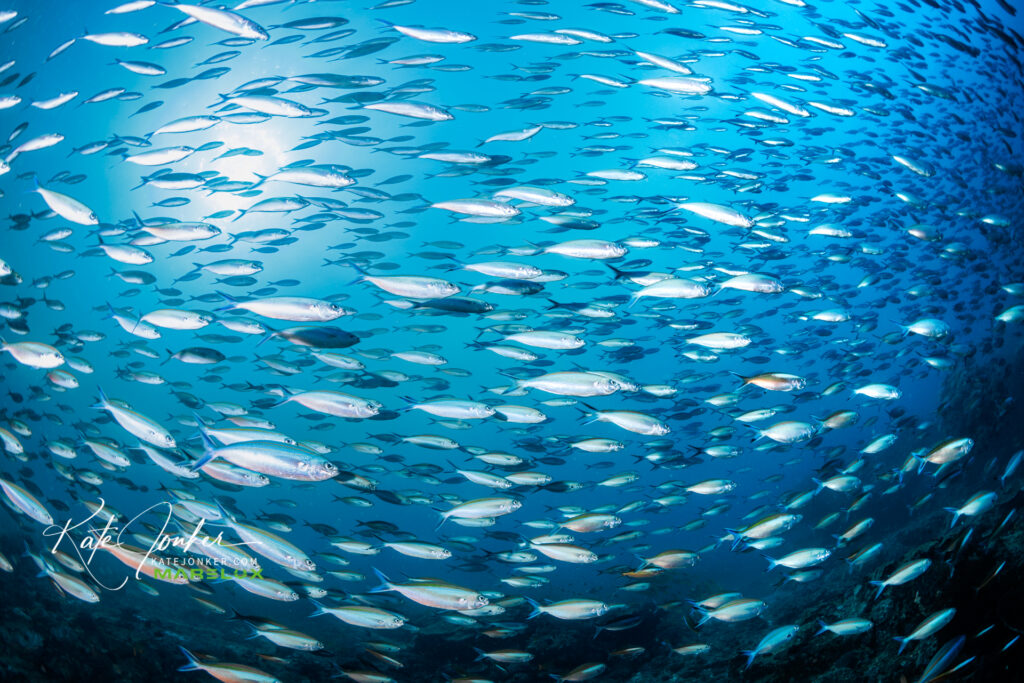
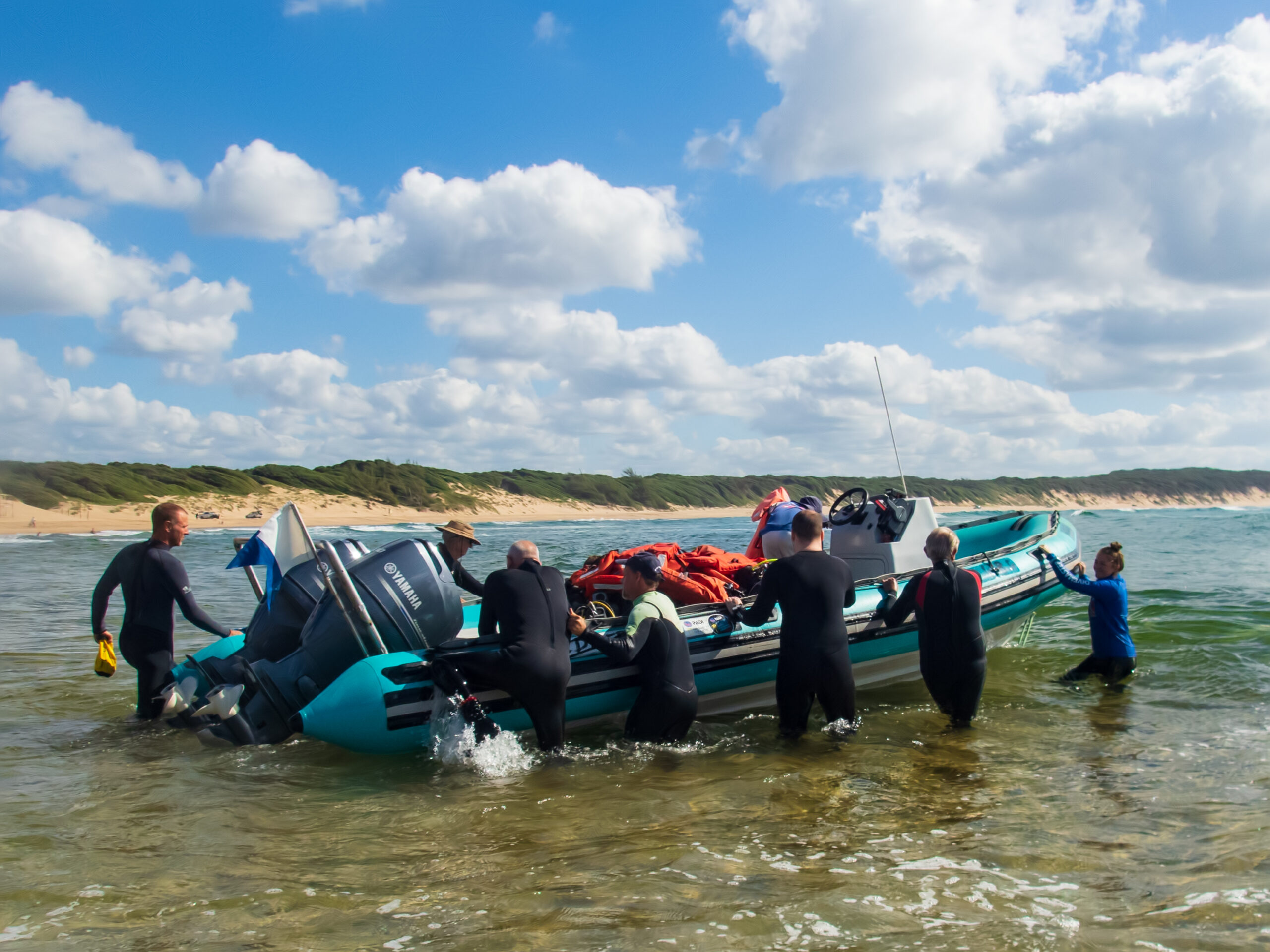
The tractor gives one last shove and the boat slides off the sand into the surf. Life jackets on, camera zipped safely into its padded bag. Our skipper watches the waves roll in, waits, waits a little longer, then opens the throttle and steers us through the breakers into the clear blue Indian Ocean.
Every dive in Sodwana Bay starts with that beach launch, and it is one of the reasons this is among my favourite places to dive in South Africa. If you love warm water, healthy coral and having a camera in your hands, here is everything you need to know before you go.
Where is Sodwana Bay and why dive there?
Sodwana Bay sits just over 400km north of Durban on South Africa’s east coast, inside the iSimangaliso Wetland Park. This is South Africa’s first UNESCO World Heritage Site and its largest marine protected area, covering 10,700km² of ocean.
The name comes from the Zulu “Siso dwana”, meaning “us alone”, and it still feels that way. Leatherback and loggerhead turtles nest on the beaches, and the deep submarine canyons close to shore are home to the incredibly rare coelacanth, a fish that has been around since the time of the dinosaurs.
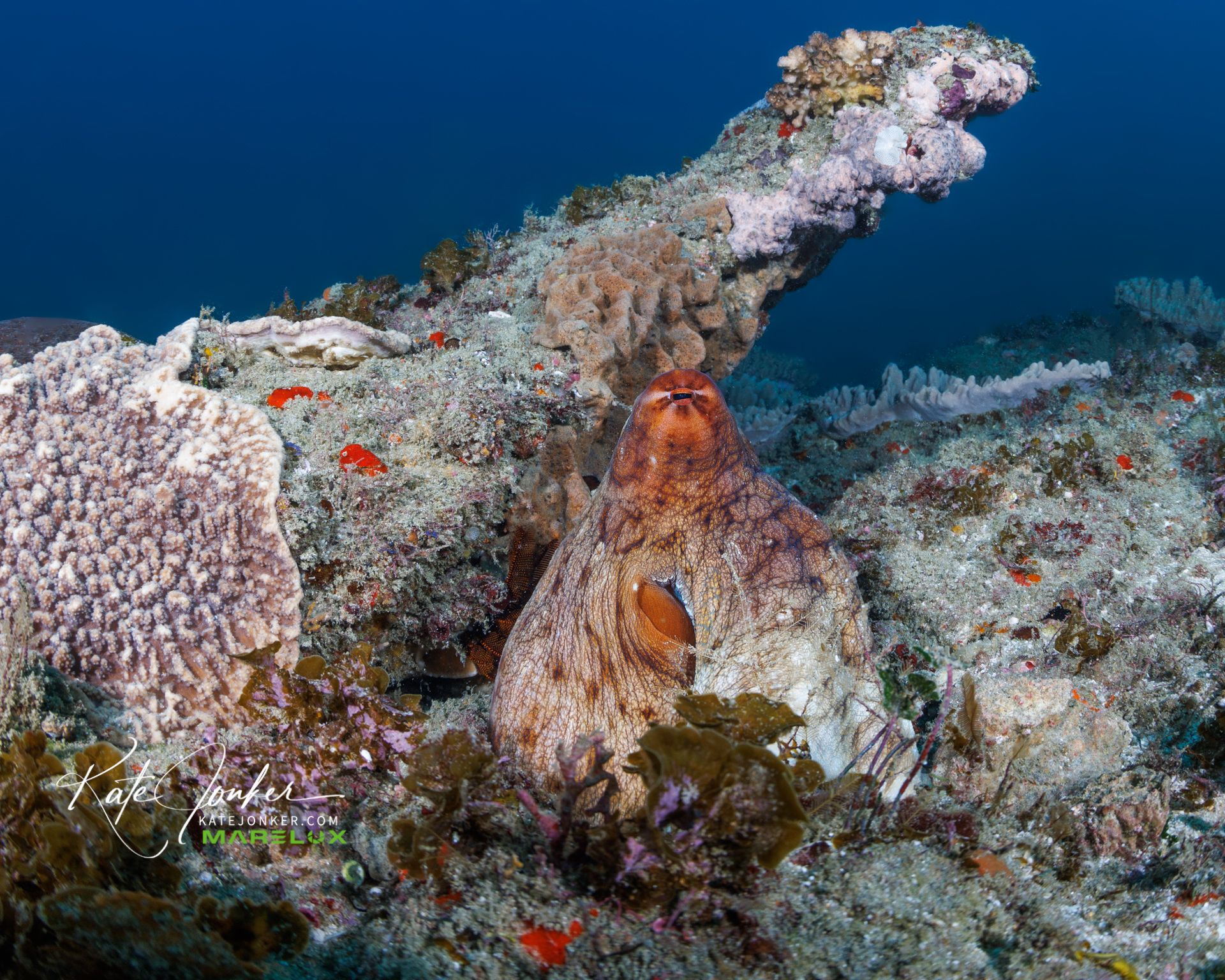
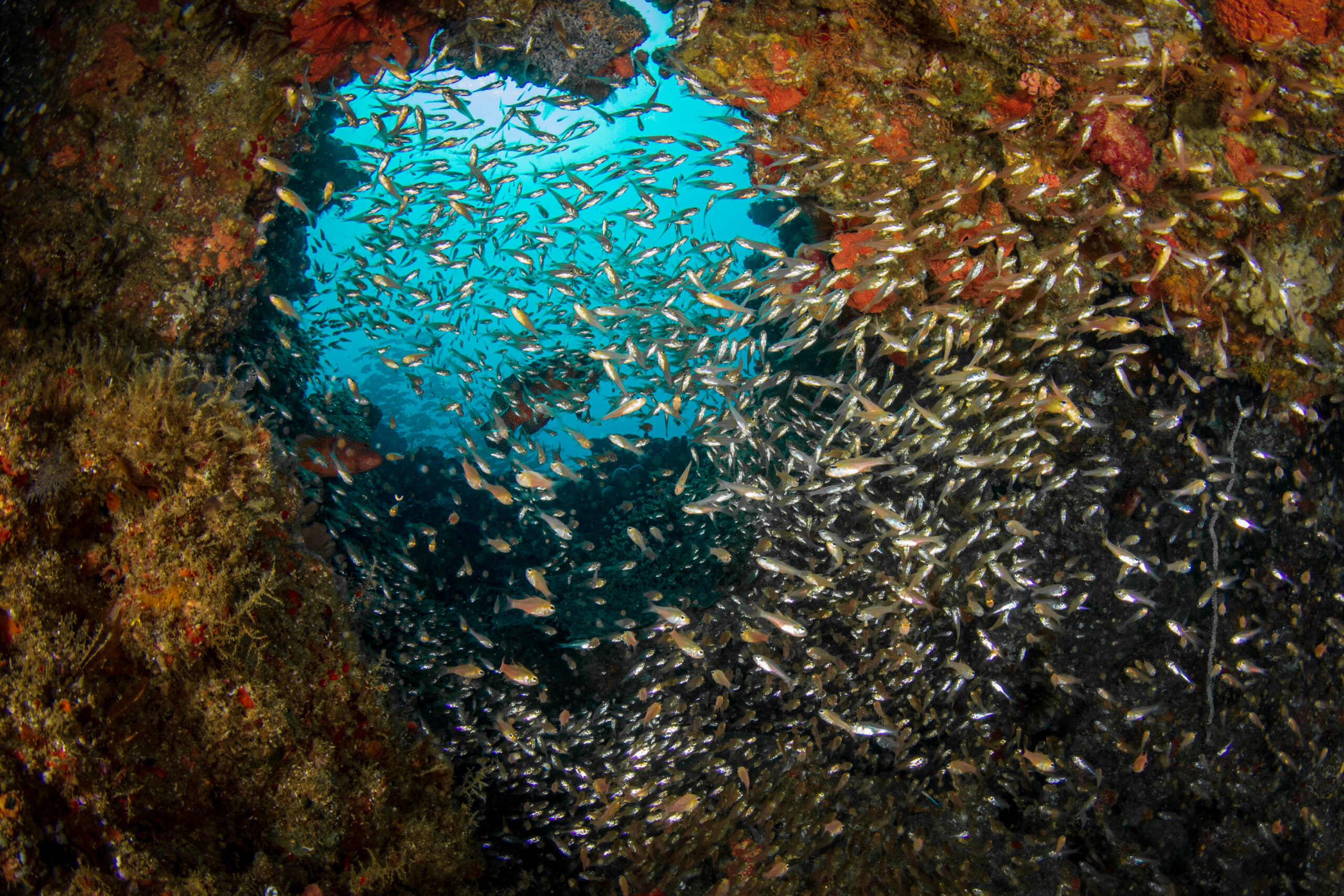
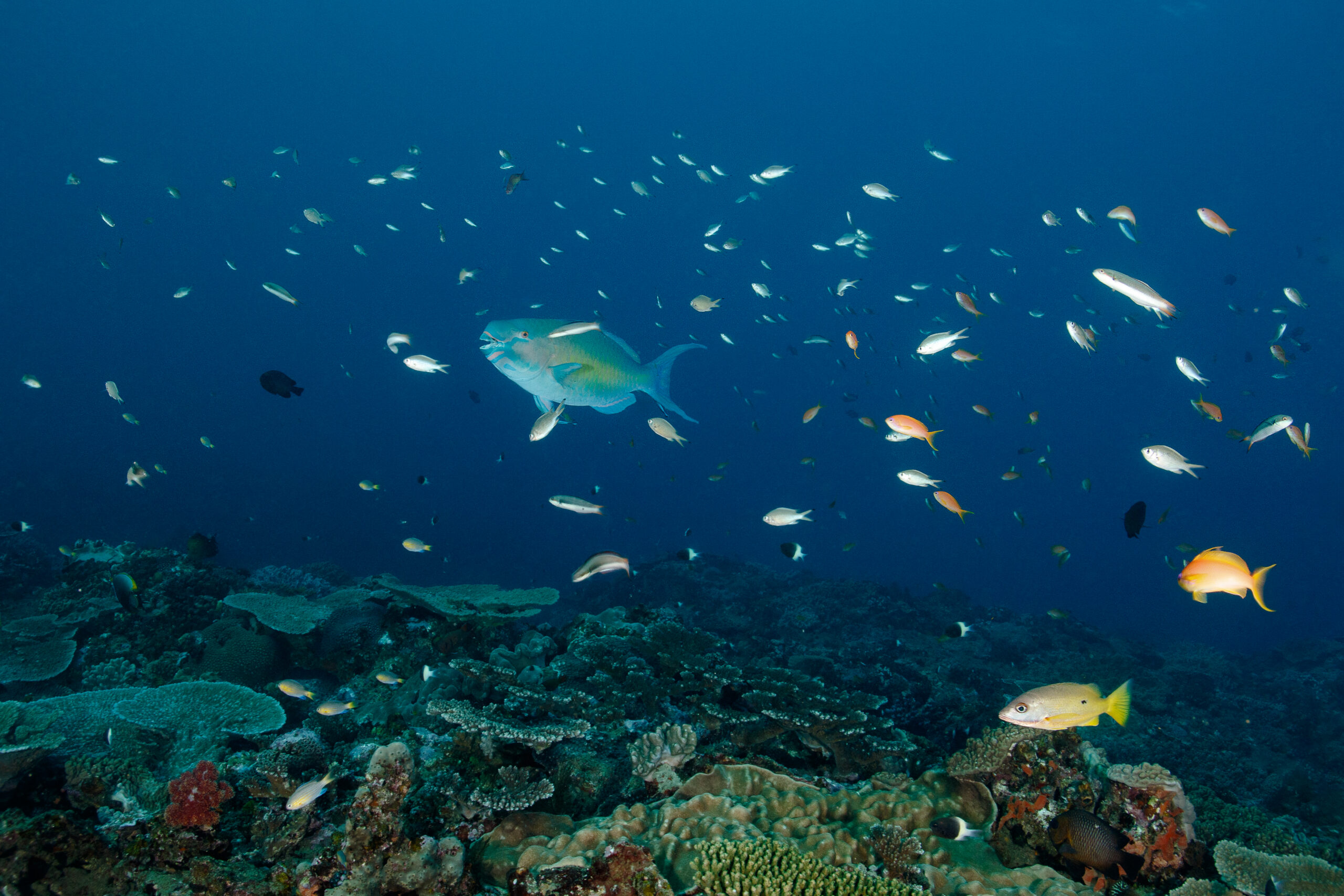
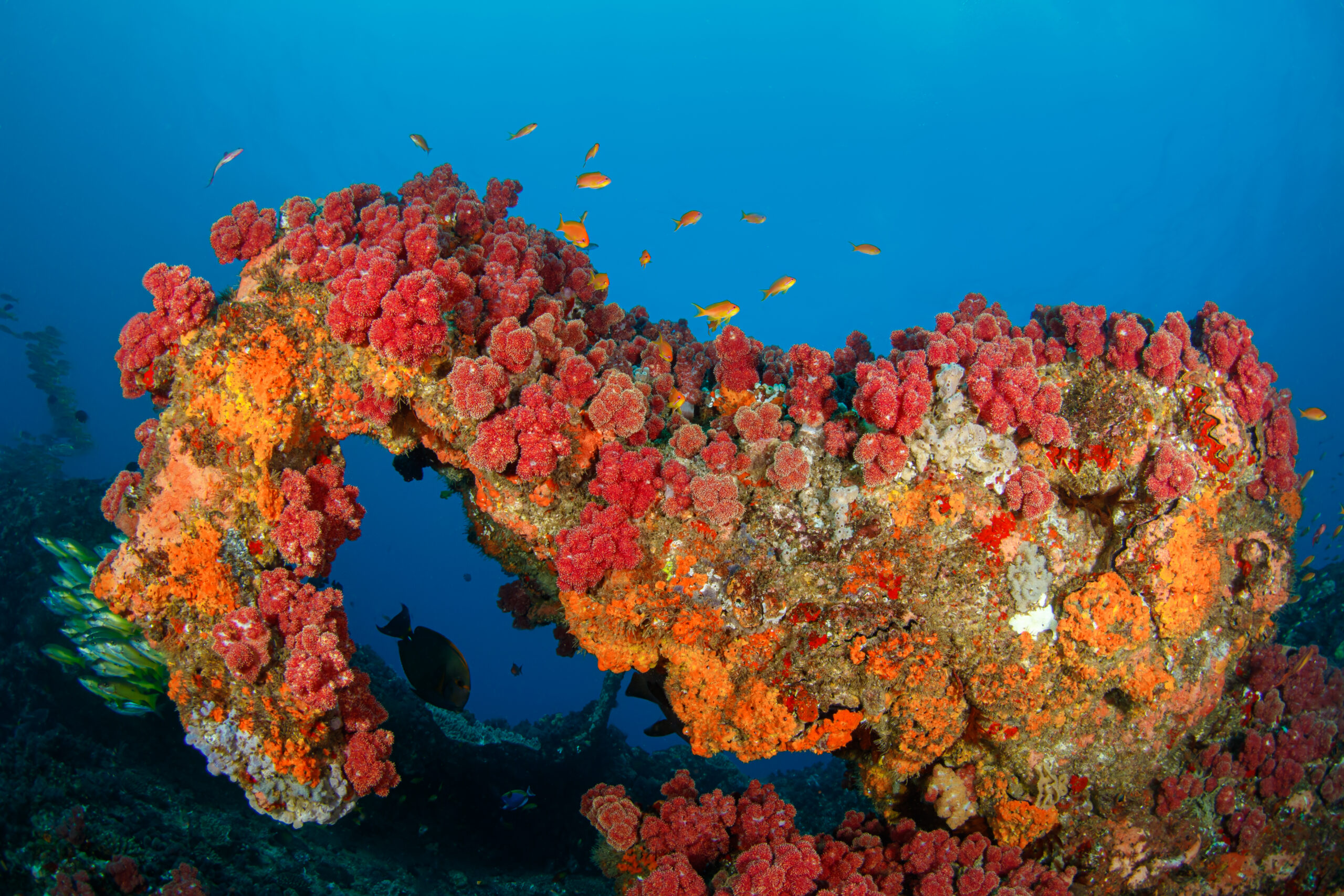
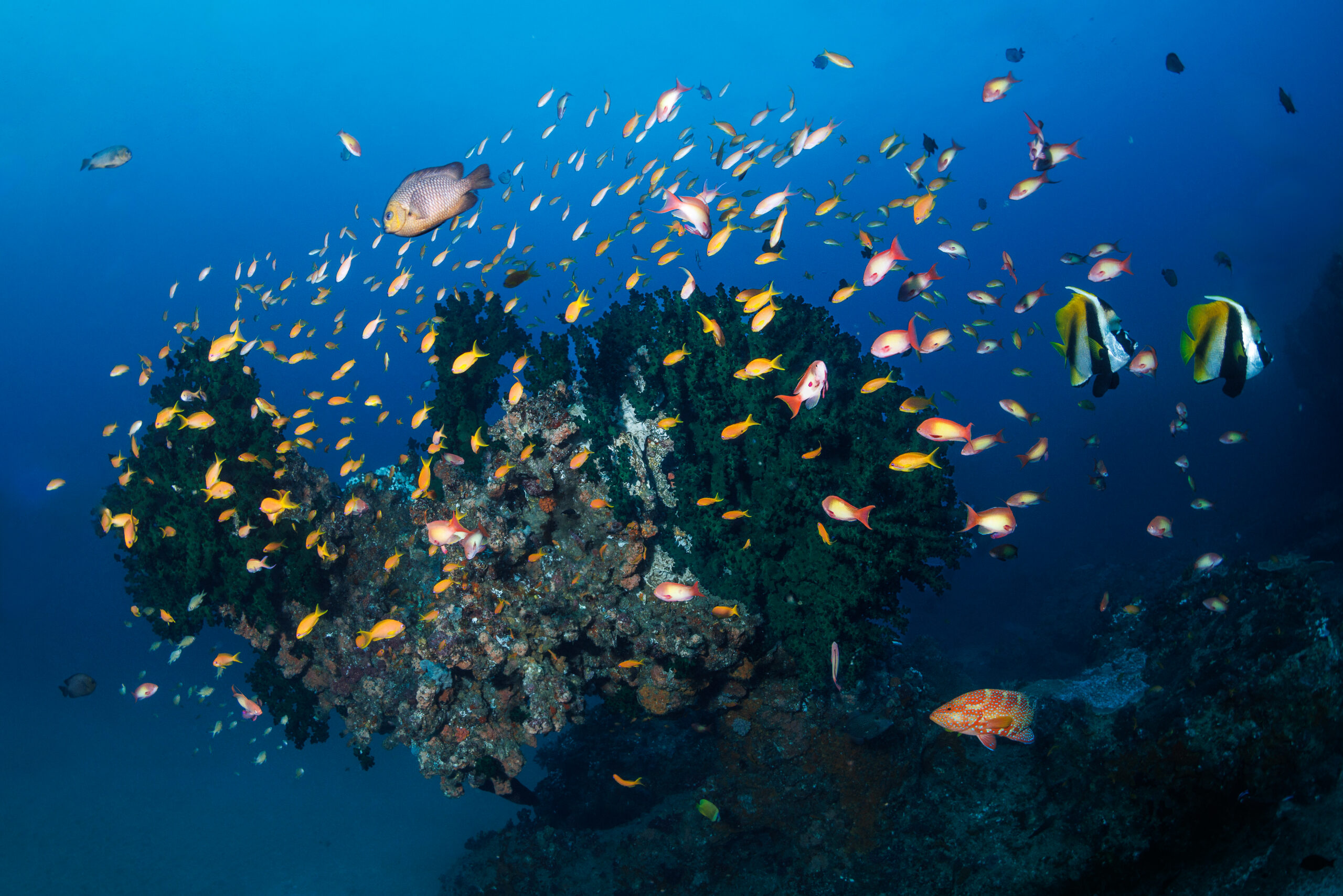
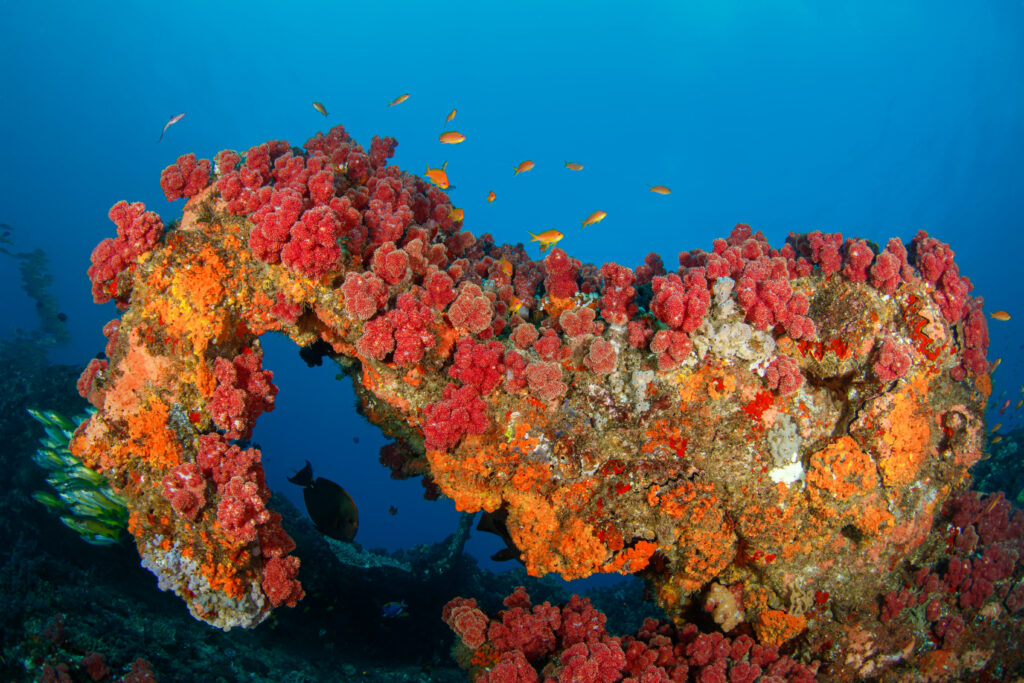
Those canyons are also why the reefs are so healthy. Nutrient-rich water wells up from the deep and feeds some of the most southerly coral reefs in the world – fossilised sand dunes densely covered in hard and soft corals, with 1,200 recorded species of fish.


What the diving is like
Diving is done from RIBs that launch through the surf from the beach at Jesser Point. The reefs are named after their distance from that point – Two Mile, Five Mile, Seven Mile, Nine Mile – so you always know roughly how long the boat ride will be.
Depths range from 7m to more than 40m, with plenty of sites shallow enough for Open Water divers. Visibility tends to be 10m upwards and the water is warm (24°C on my last trip in May). Most dives happen in the morning, with launches at 07:00, 08:30 and 11:30, which leaves your afternoons free for a long lunch, the pool and going through your photos.
Sodwana is a year-round destination. We tend to visit in May, outside the school holidays and when the weather is cooler. Between November and February the turtles come ashore to lay their eggs.

The best dive sites in Sodwana Bay
Different reefs are known for different subjects, so check where you are diving tomorrow before you set up your camera tonight.
- Two Mile Reef: The largest and most dived reef, over 1.8km long and 900m wide, with gullies, overhangs and swim-throughs. Wayne’s World, Coral Gardens and Caves and Overhangs are favourites, and Pinnacles has a small cave sometimes occupied by whitetip reef sharks.
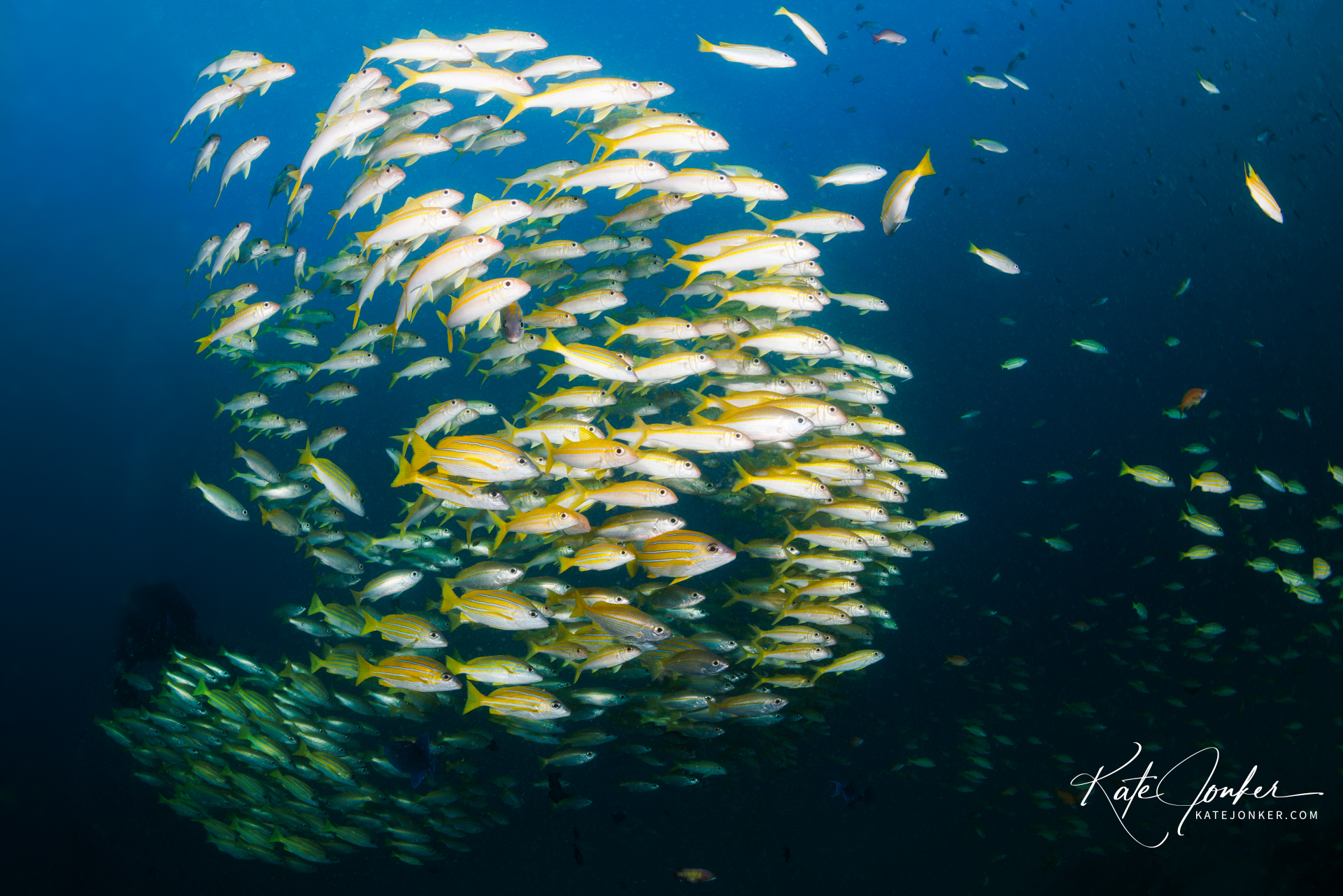
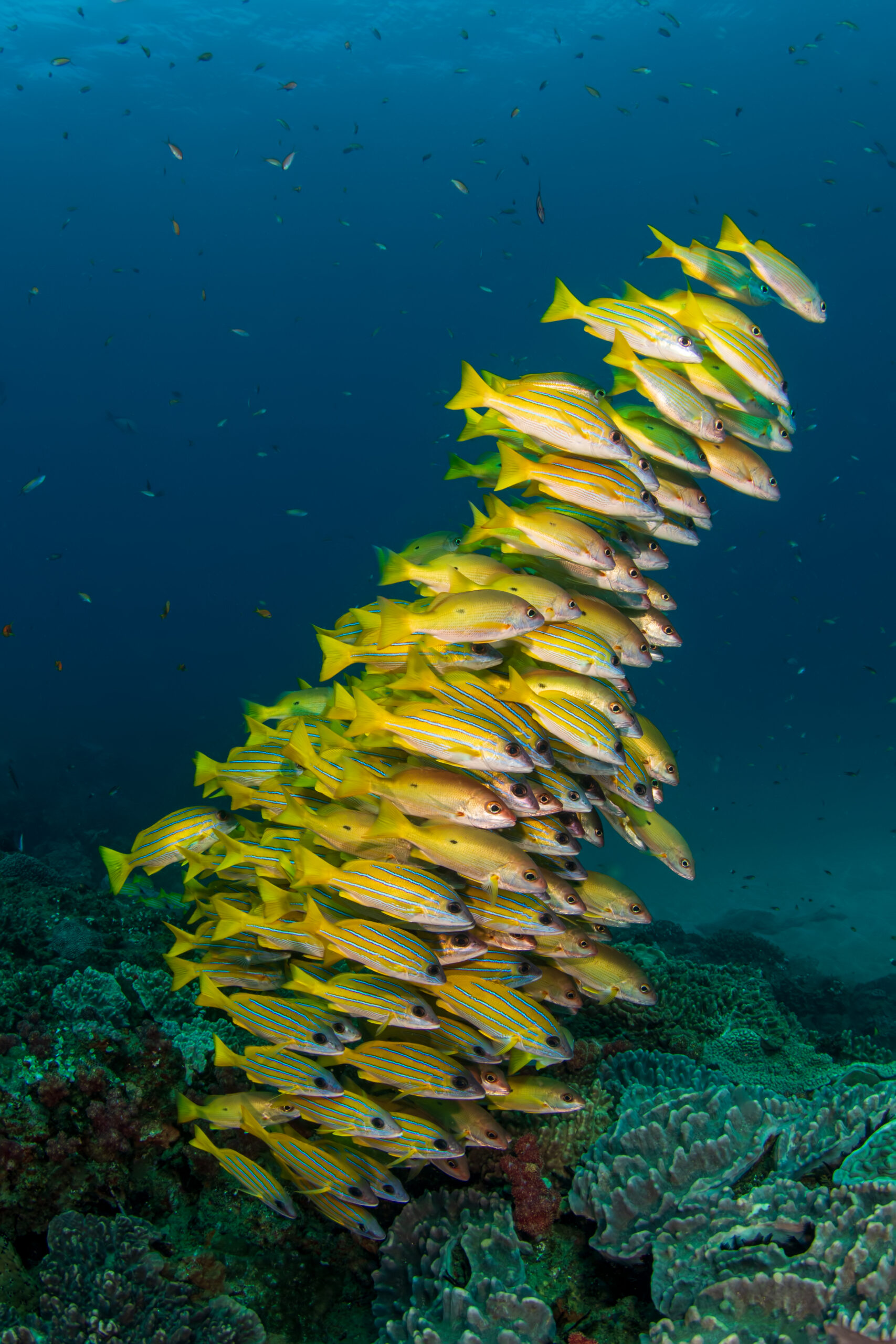
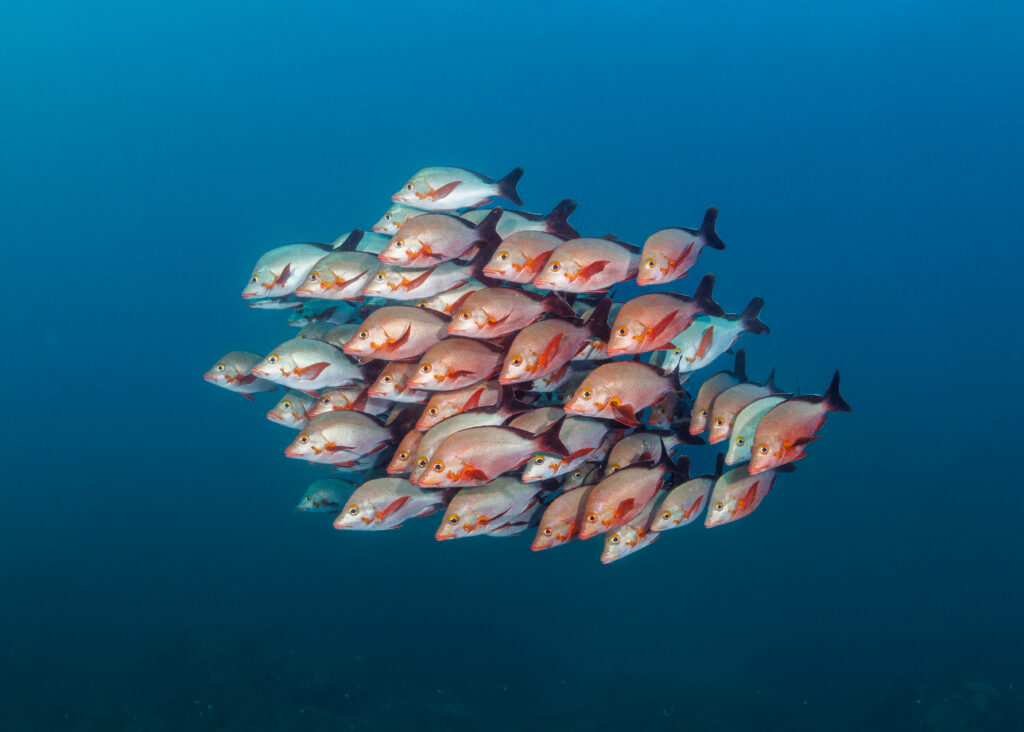
- Anton’s: Schooling fish, turtles and bait balls. Go wide.
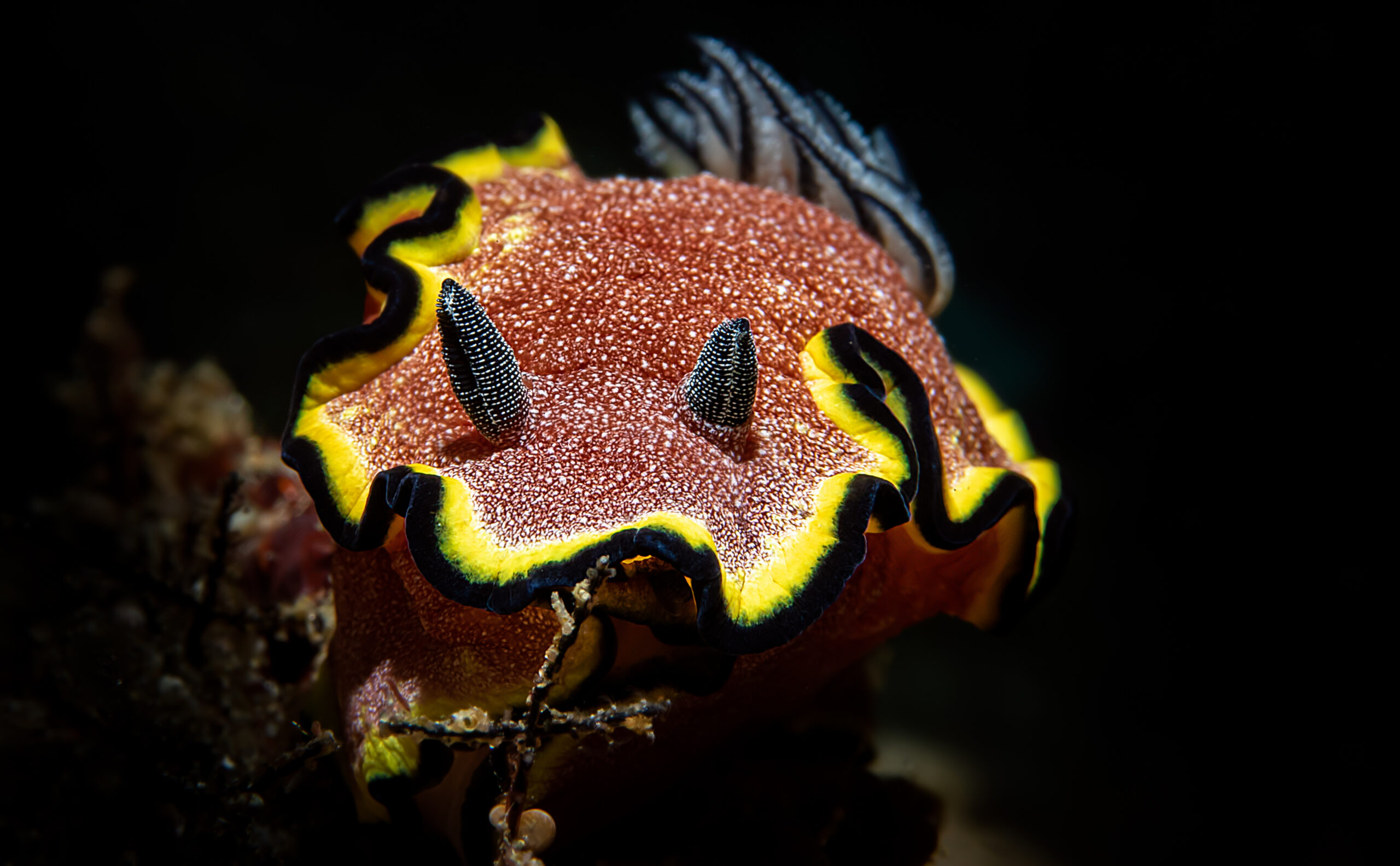
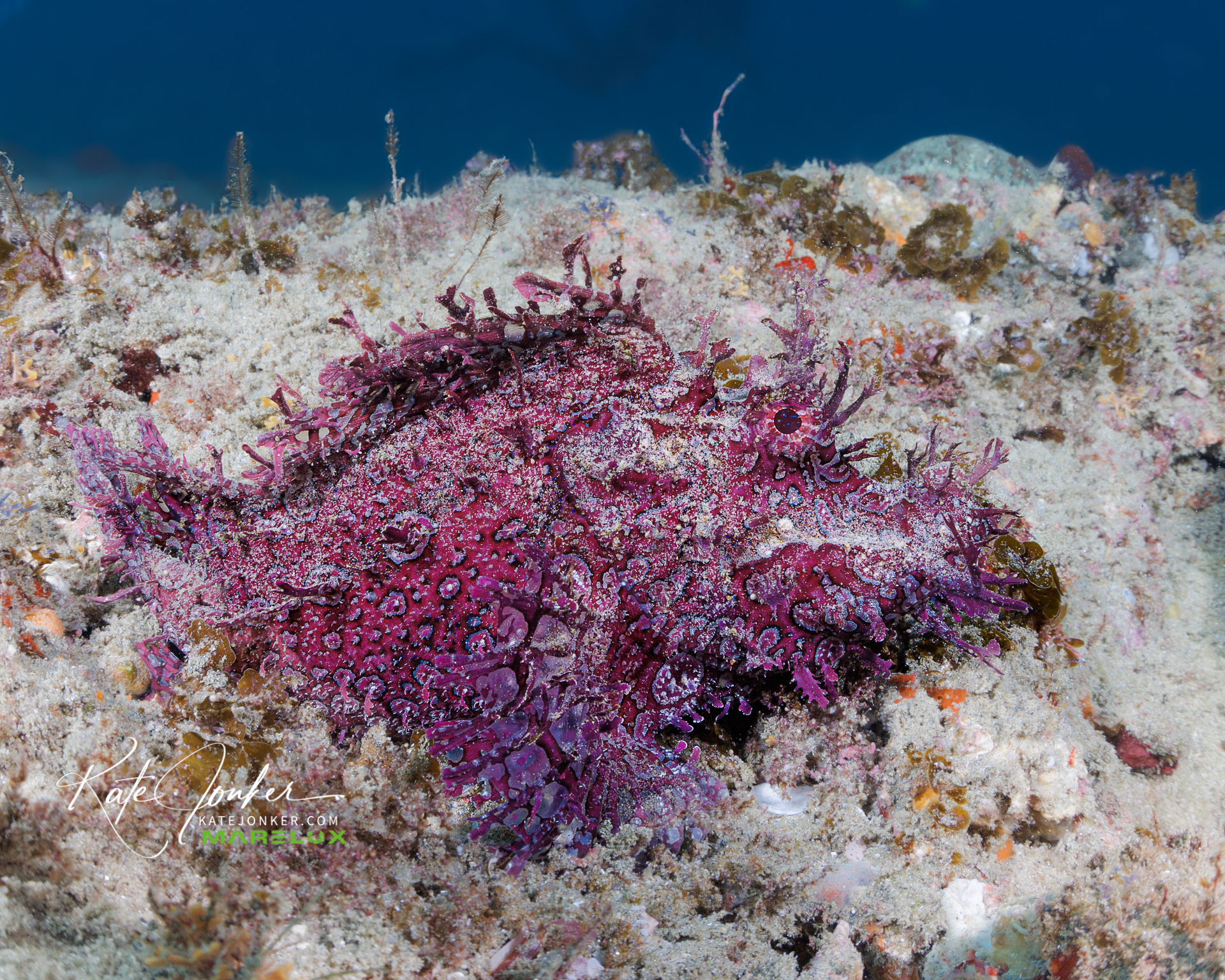
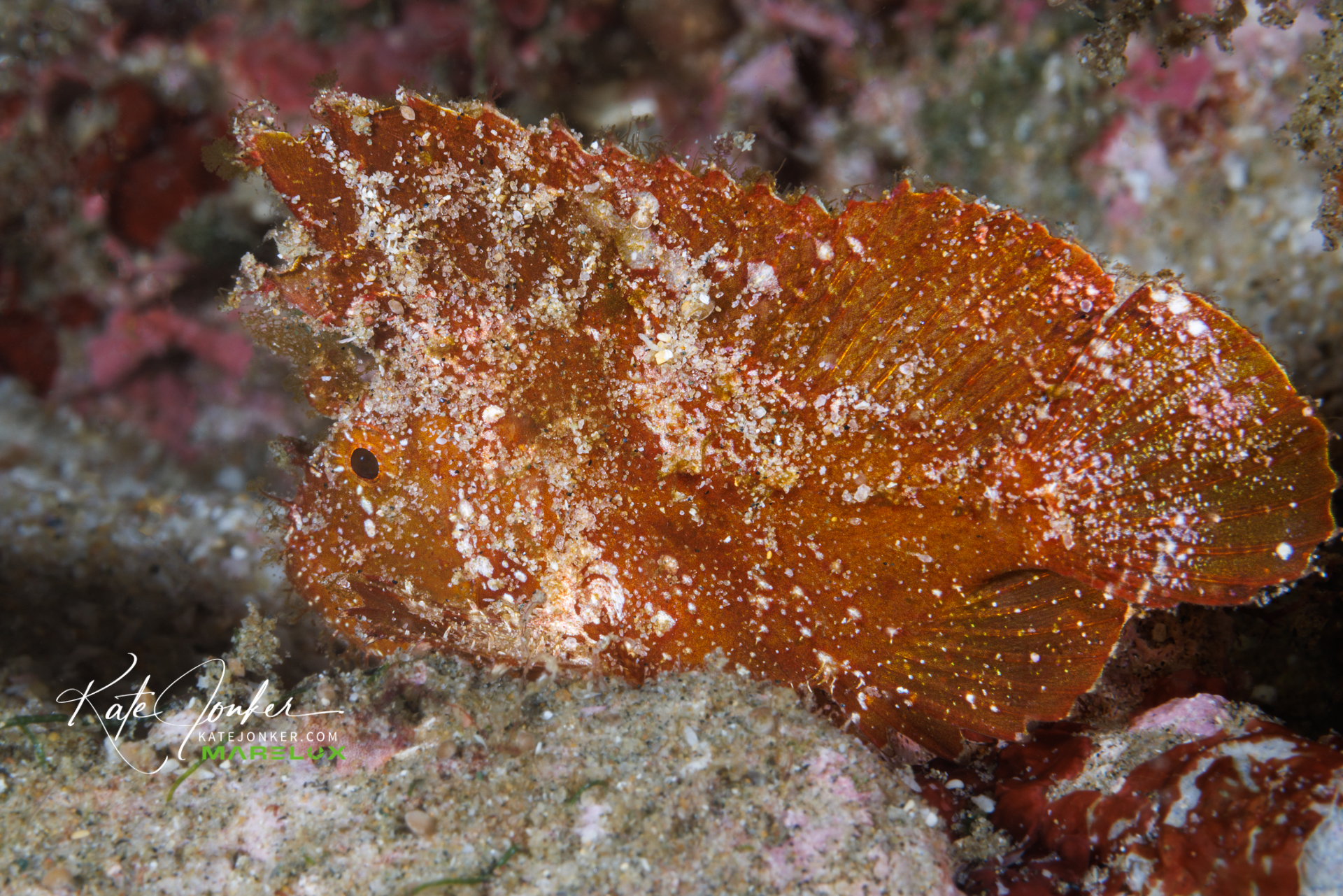
- Bikini: A deeper cleaning station and a macro photographer’s playground, with shrimps, eels, juvenile fish and nudibranchs galore. This is where our guide found us a purple Rhinopias and a tiny seamoth couple.
- Five Mile: Some of the healthiest coral gardens I have ever seen.
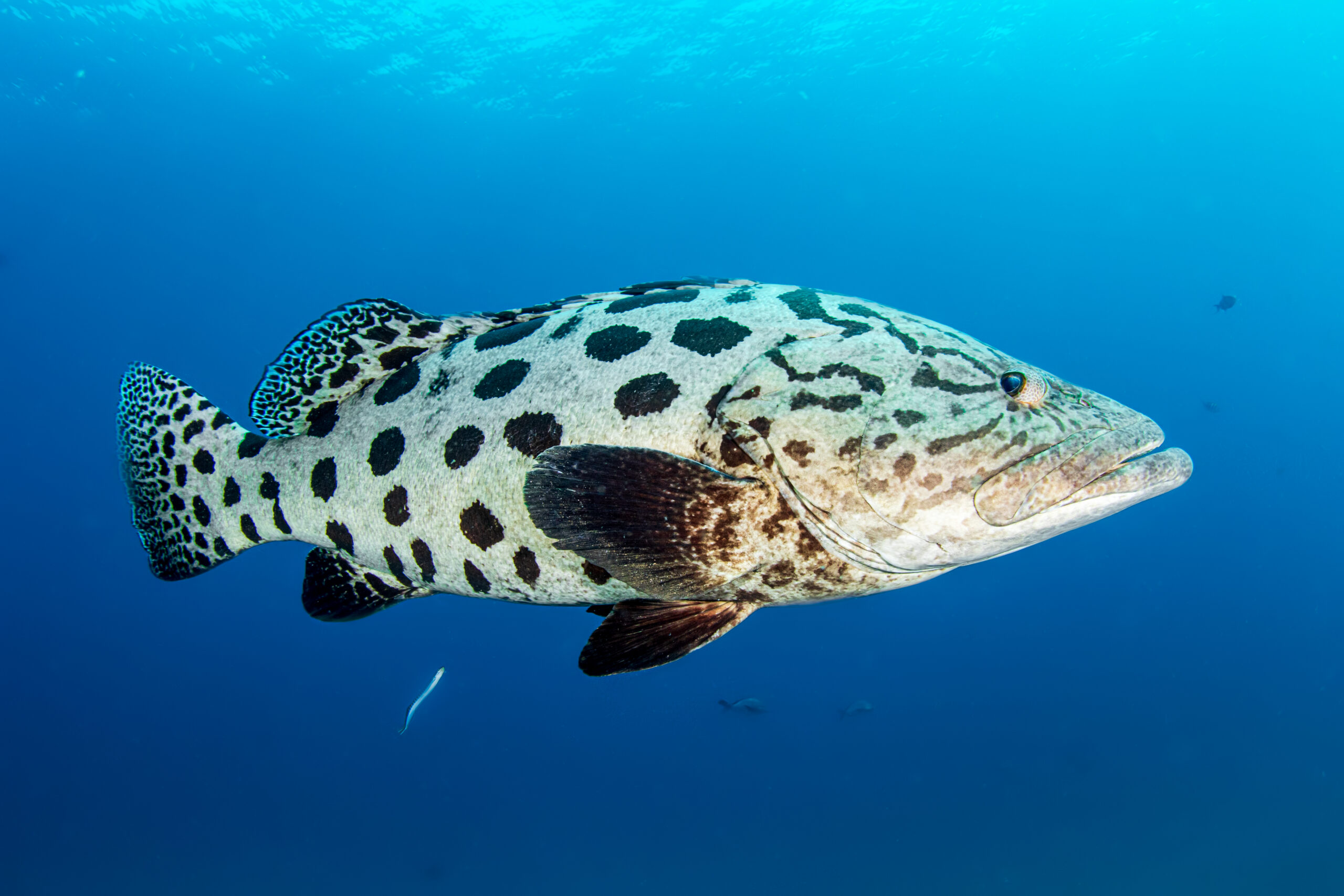
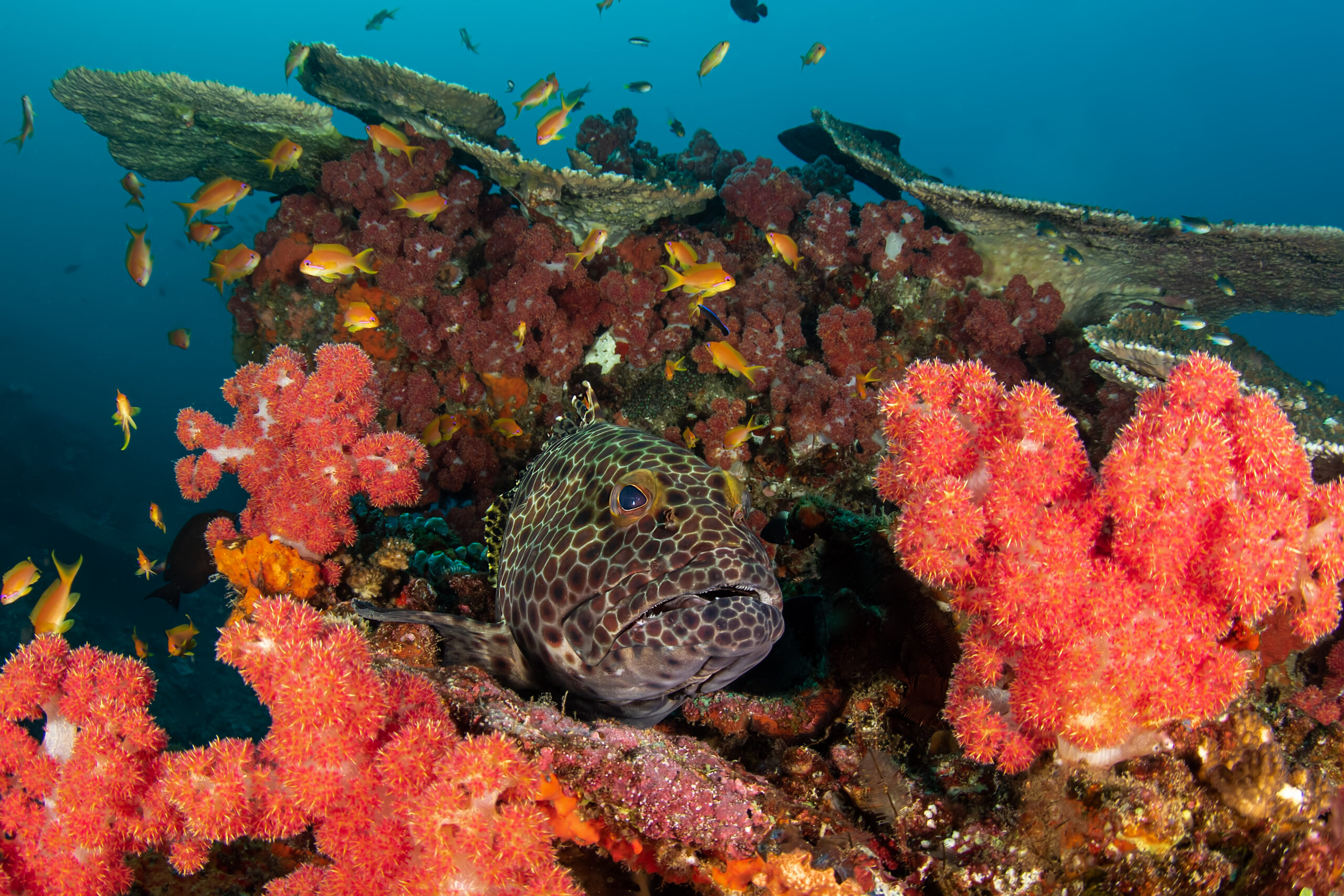
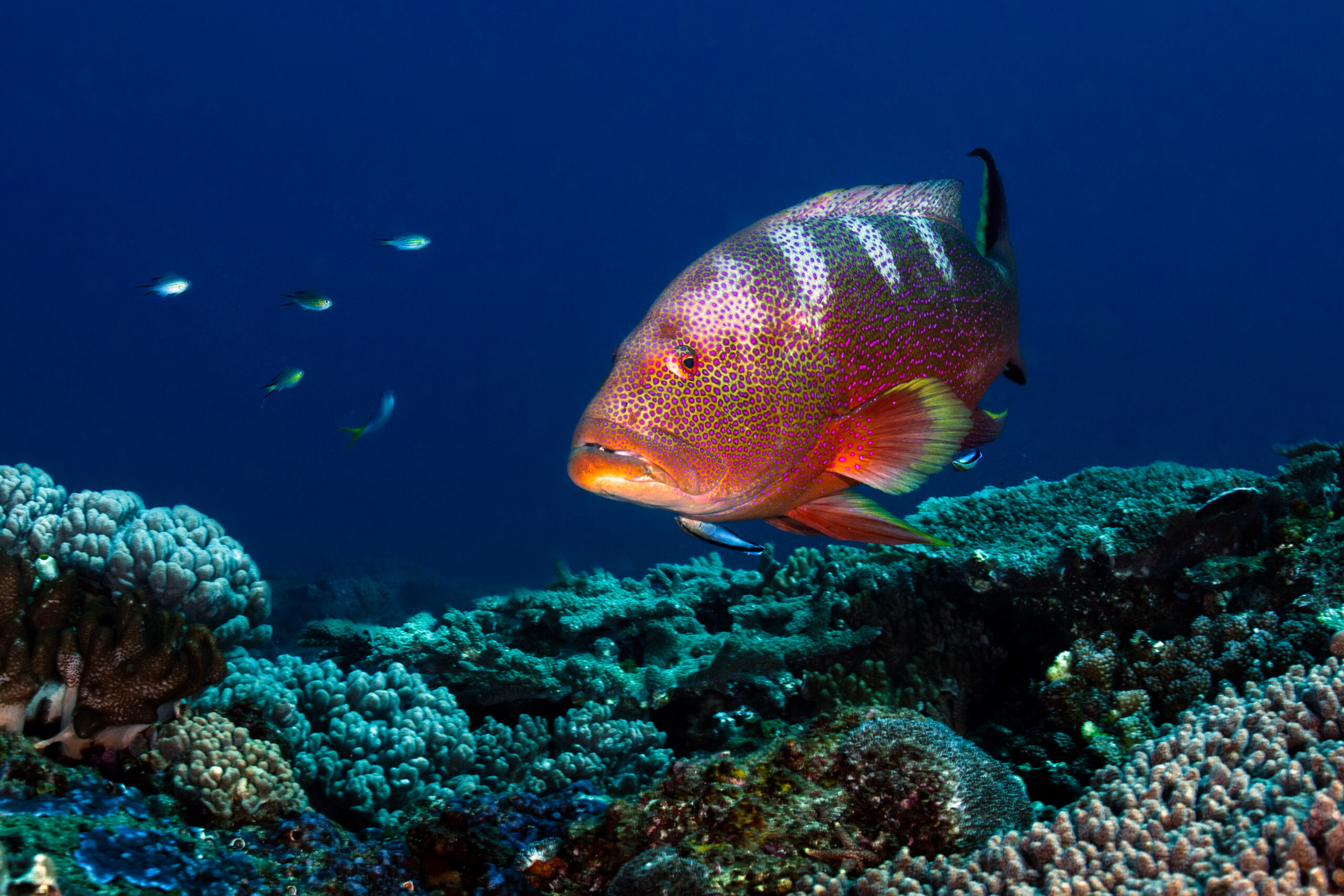
- Seven Mile: My personal favourite. Mushroom-shaped pinnacles, massive anemone fields and a potato bass so relaxed it seemed to pose for photos.
- Nine Mile: A deeper reef famous for its giant green tree coral, often visited by reef sharks and hunting kingfish.
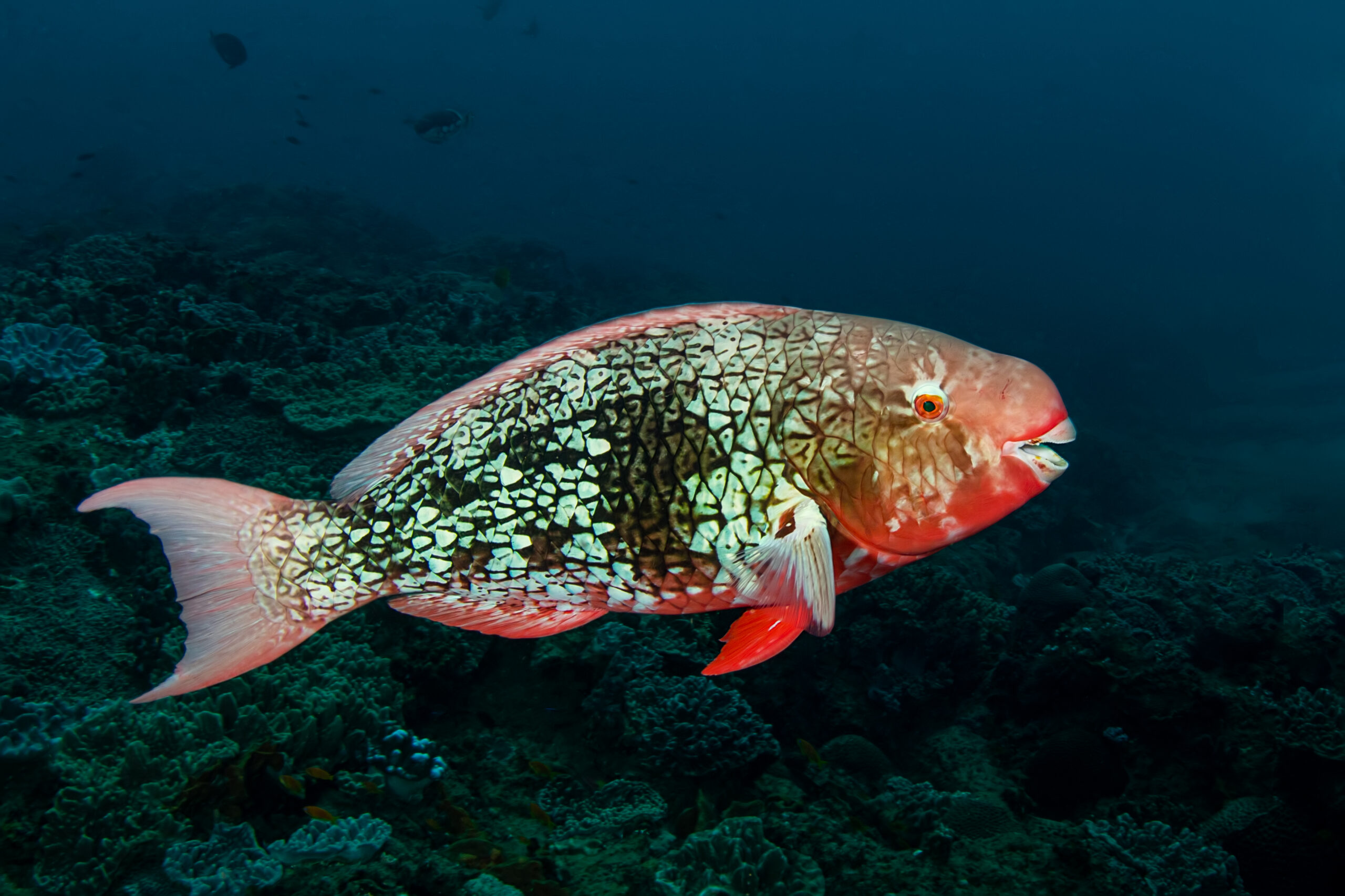
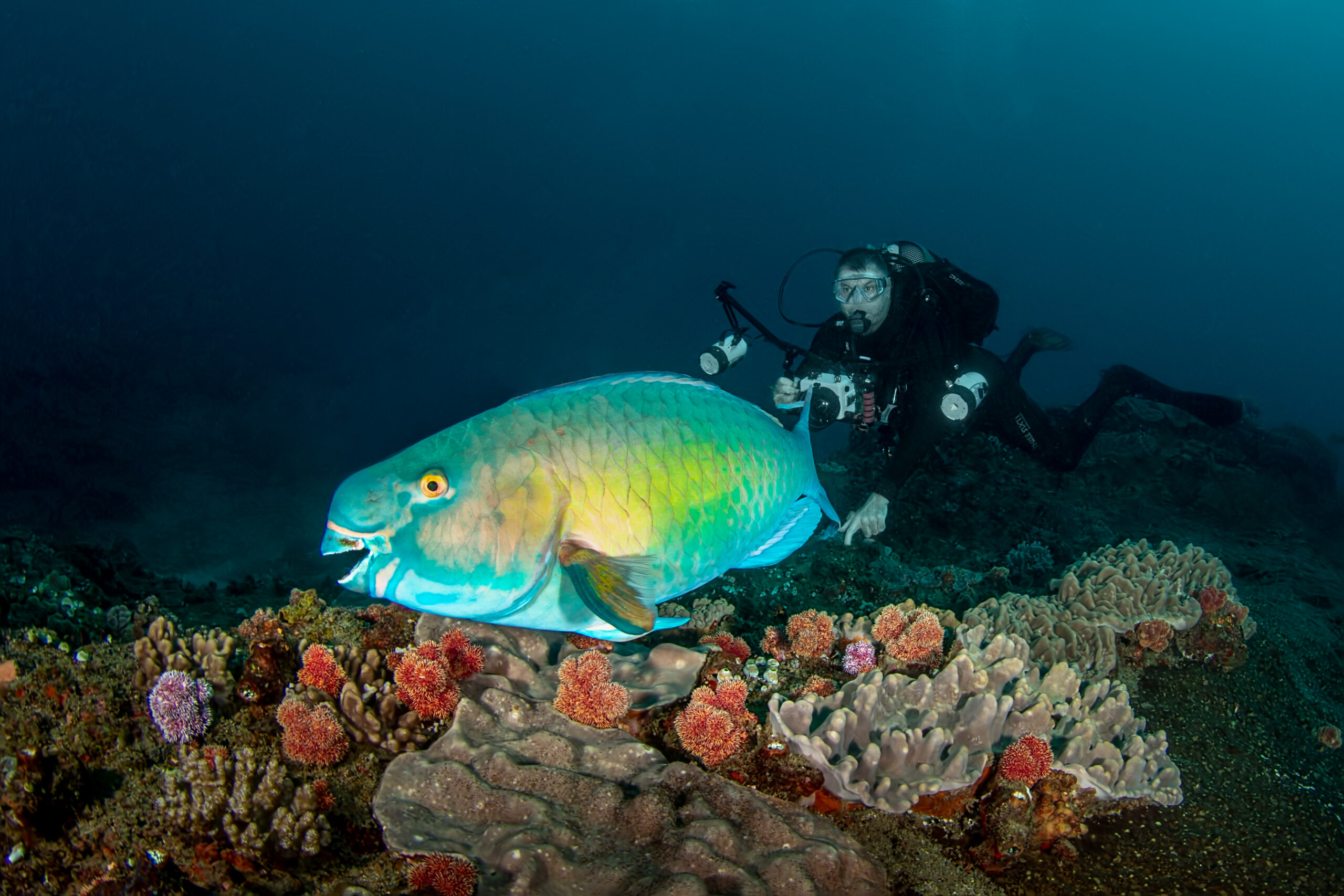
- Stringer: Huge parrotfish, potato bass, nudibranchs and twobar anemonefish.
Wide angle photography in Sodwana Bay
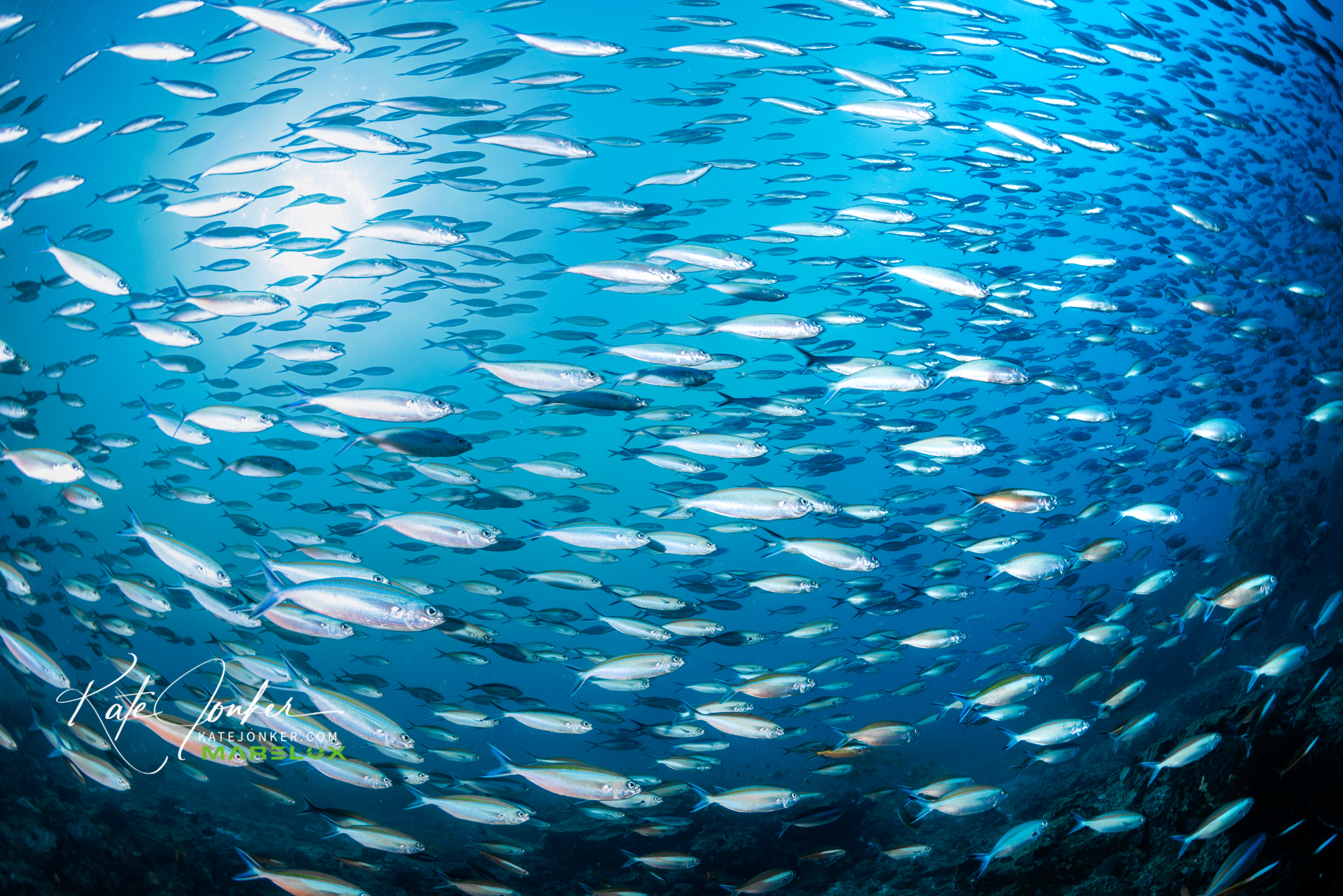
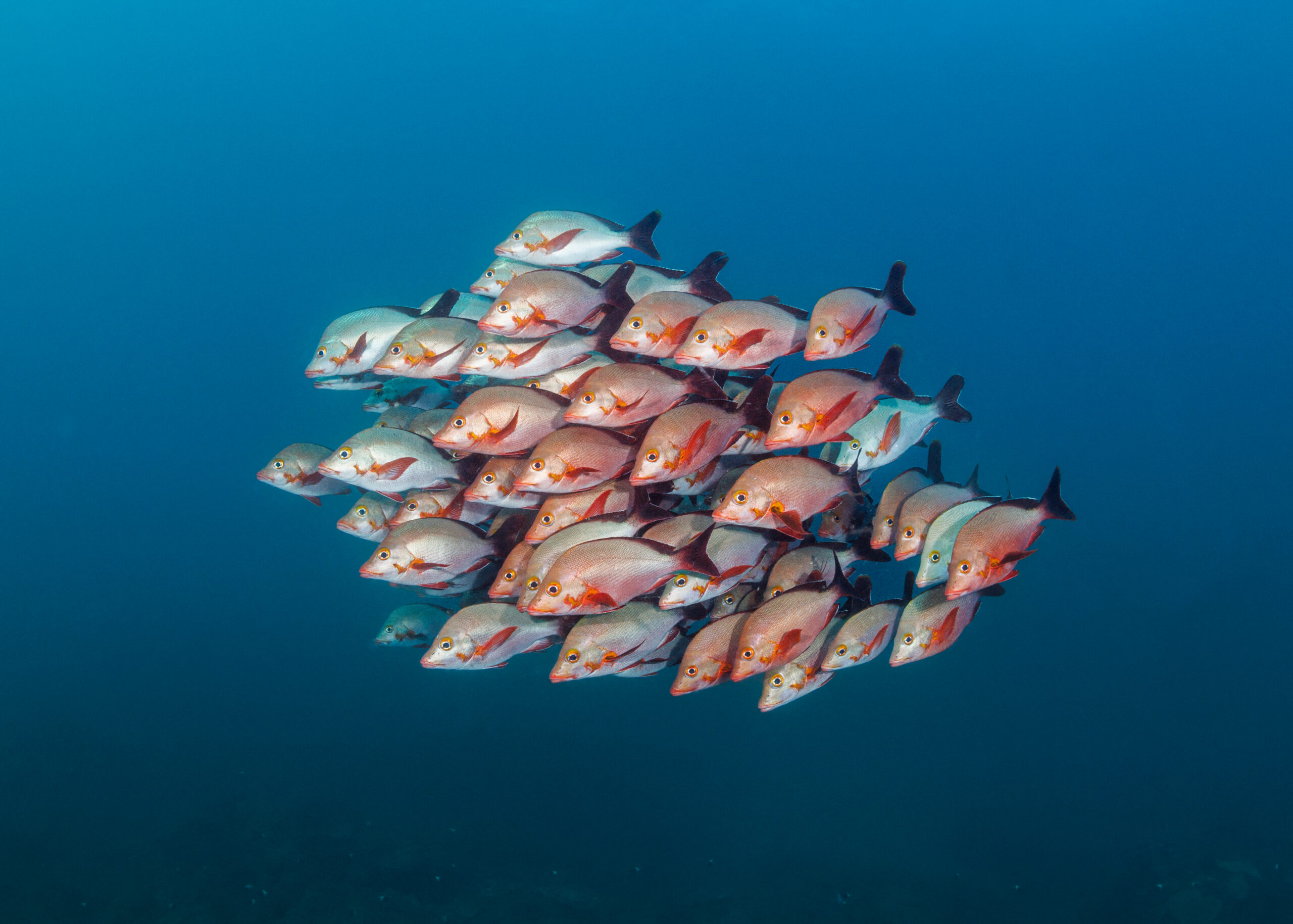
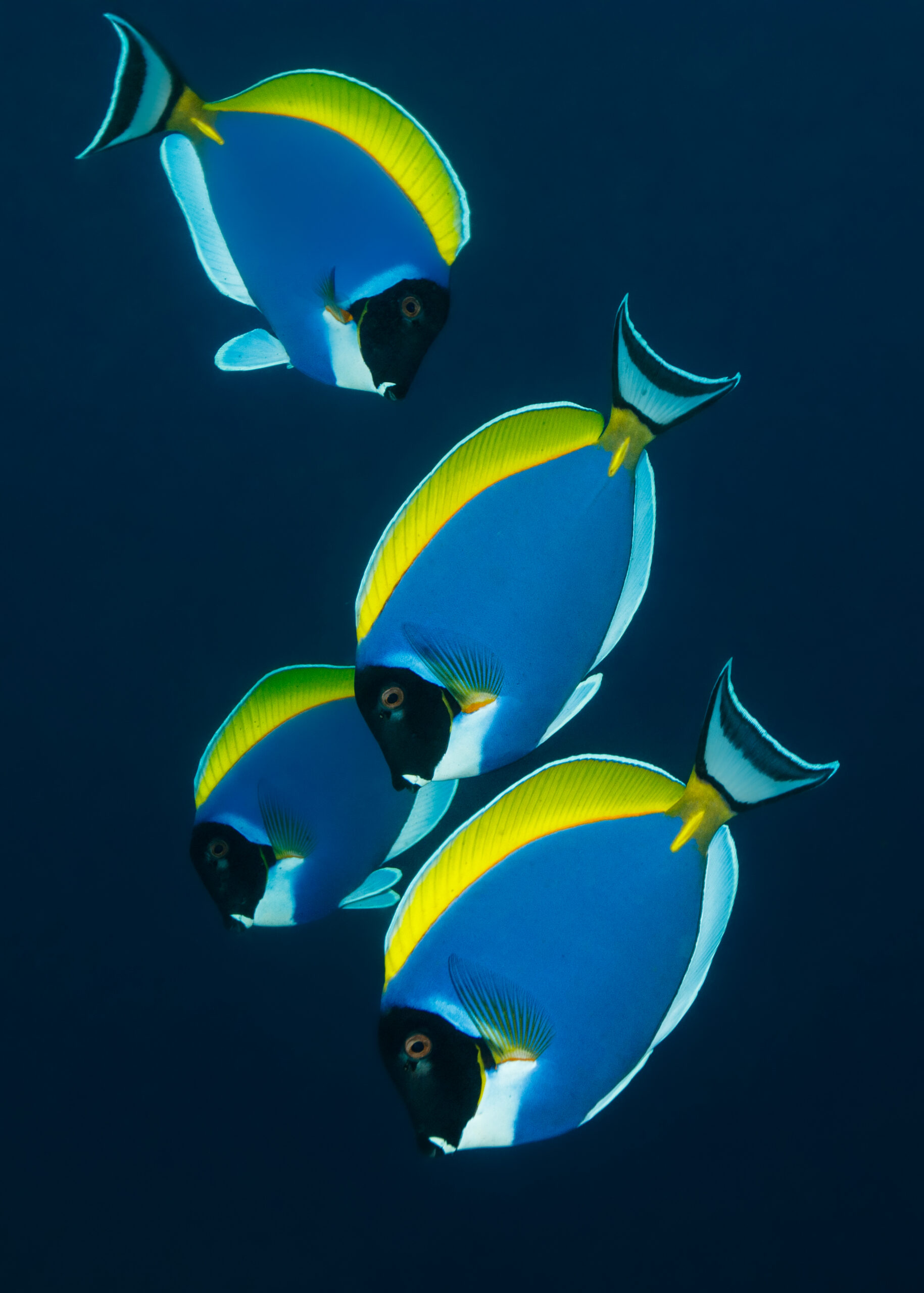
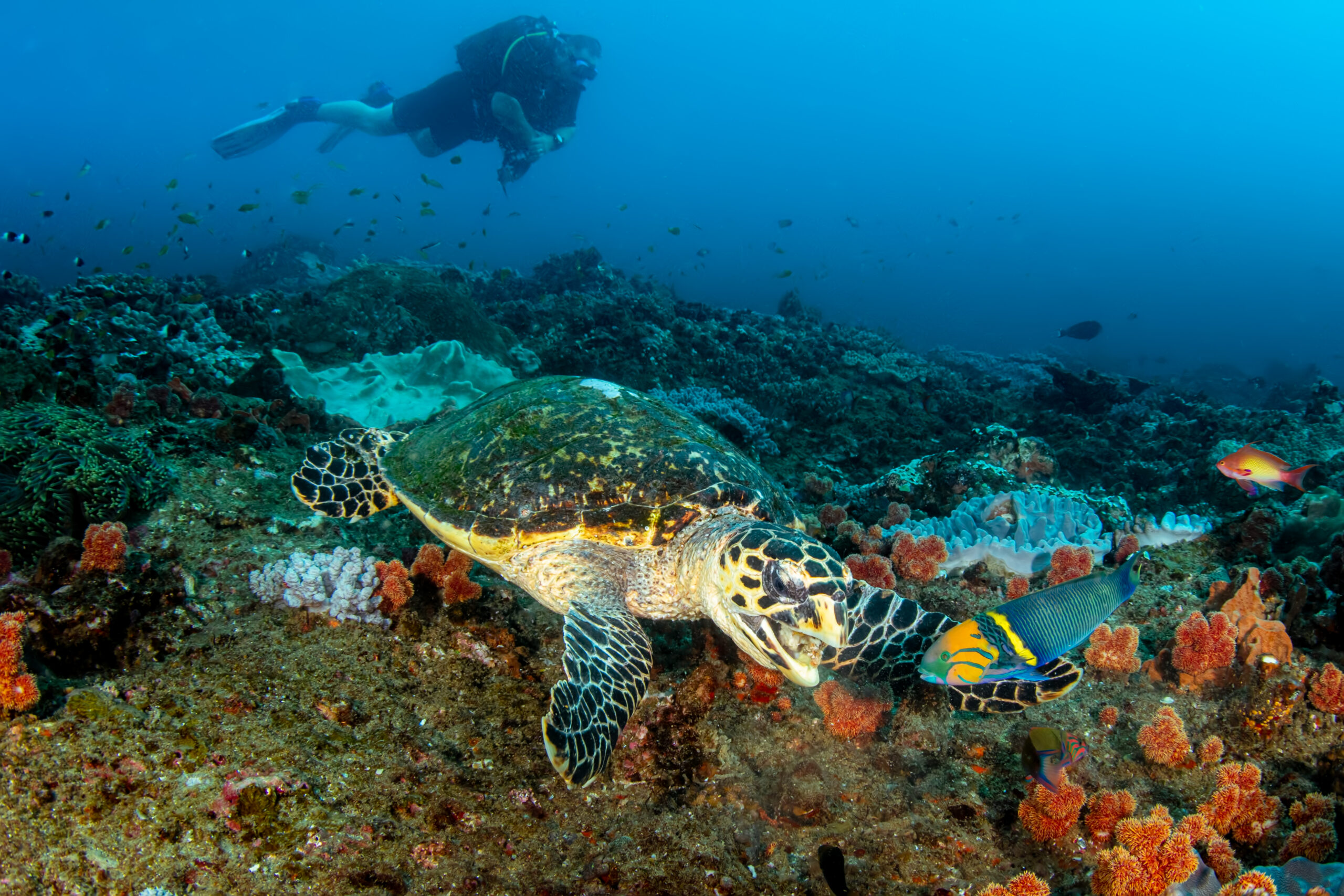
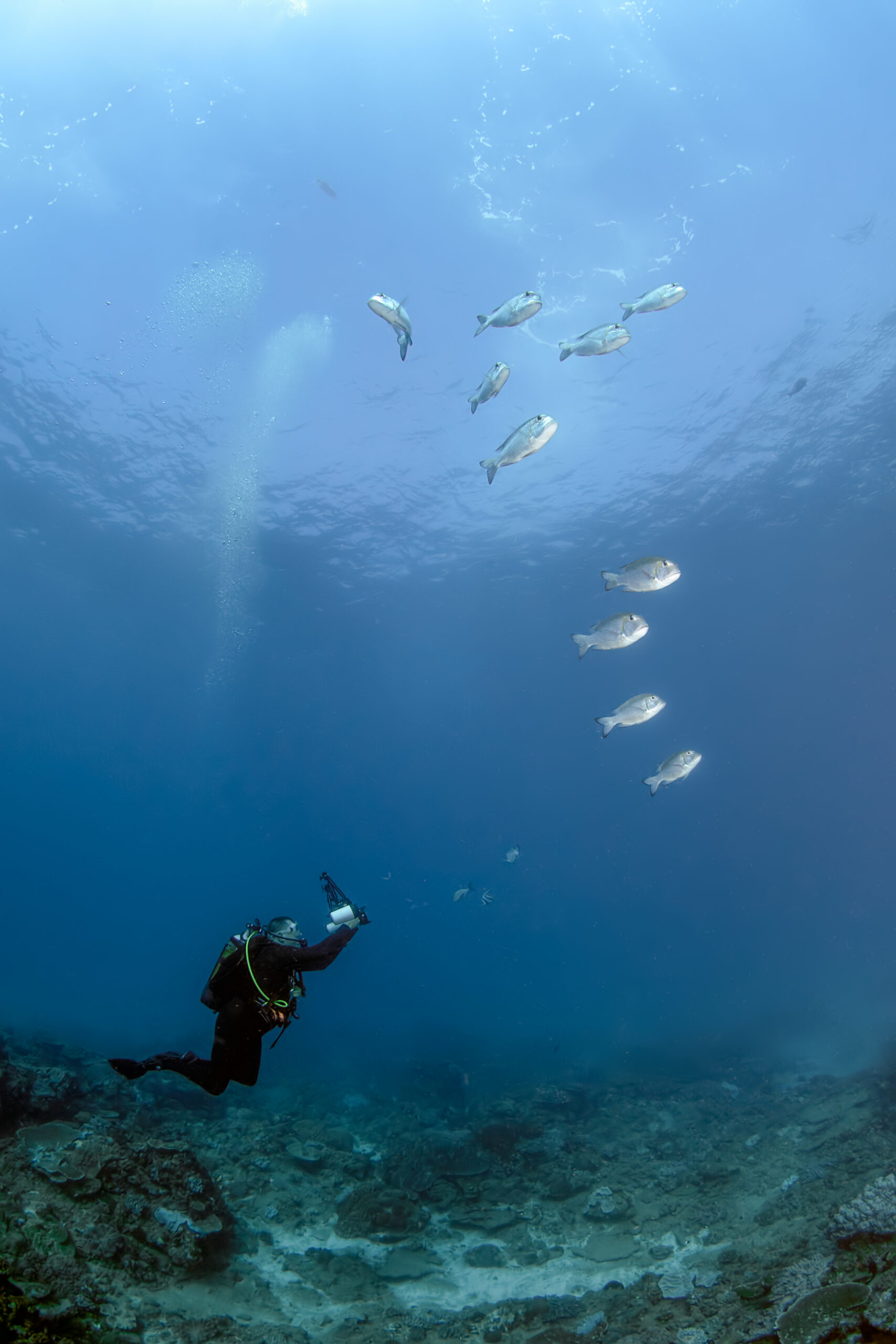
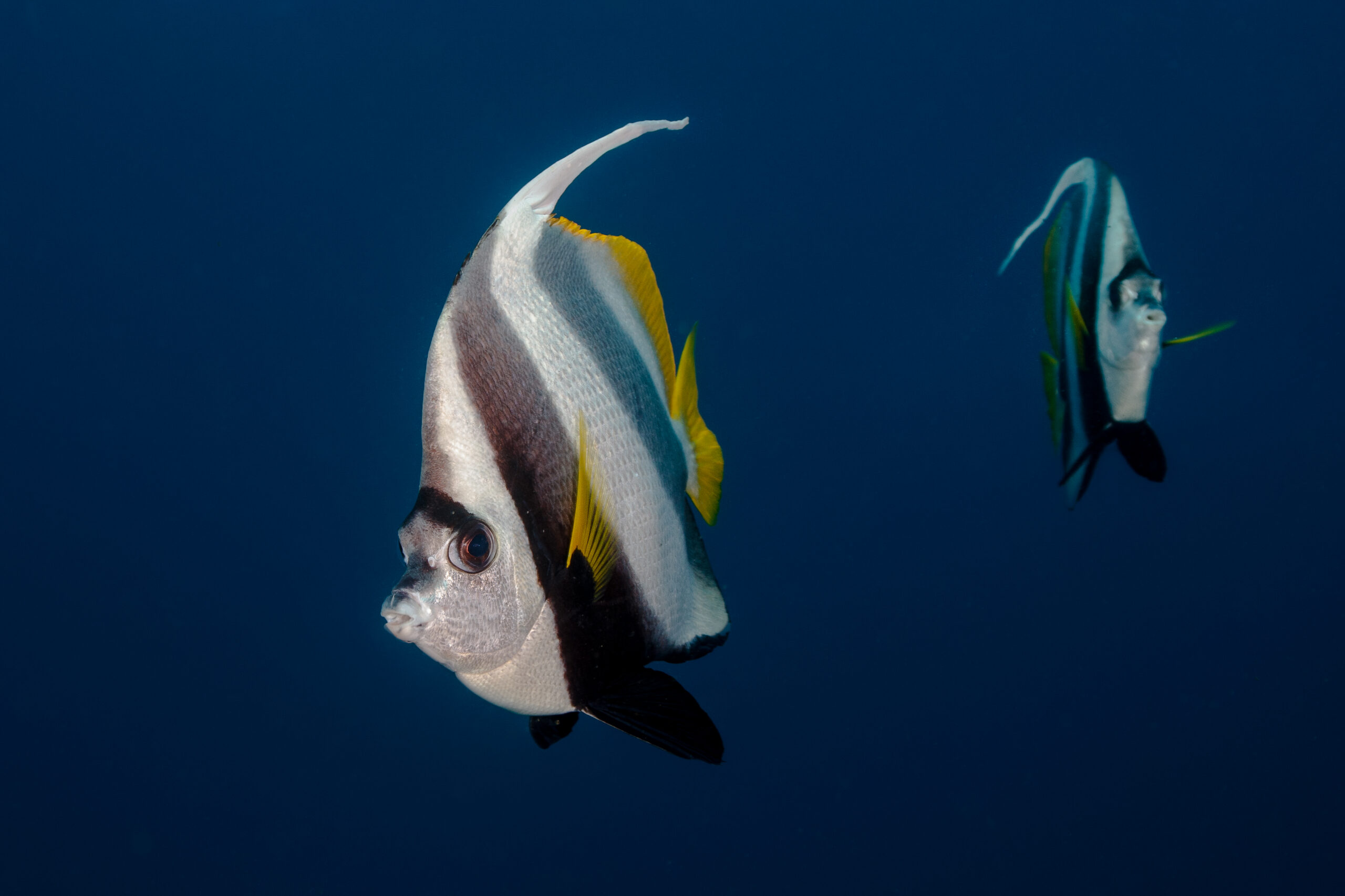
In Sodwana, when in doubt, go wide angle. Colourful reef fish are everywhere, the corals are pristine and that beautiful blue water makes the perfect backdrop for vibrant reef scenes.
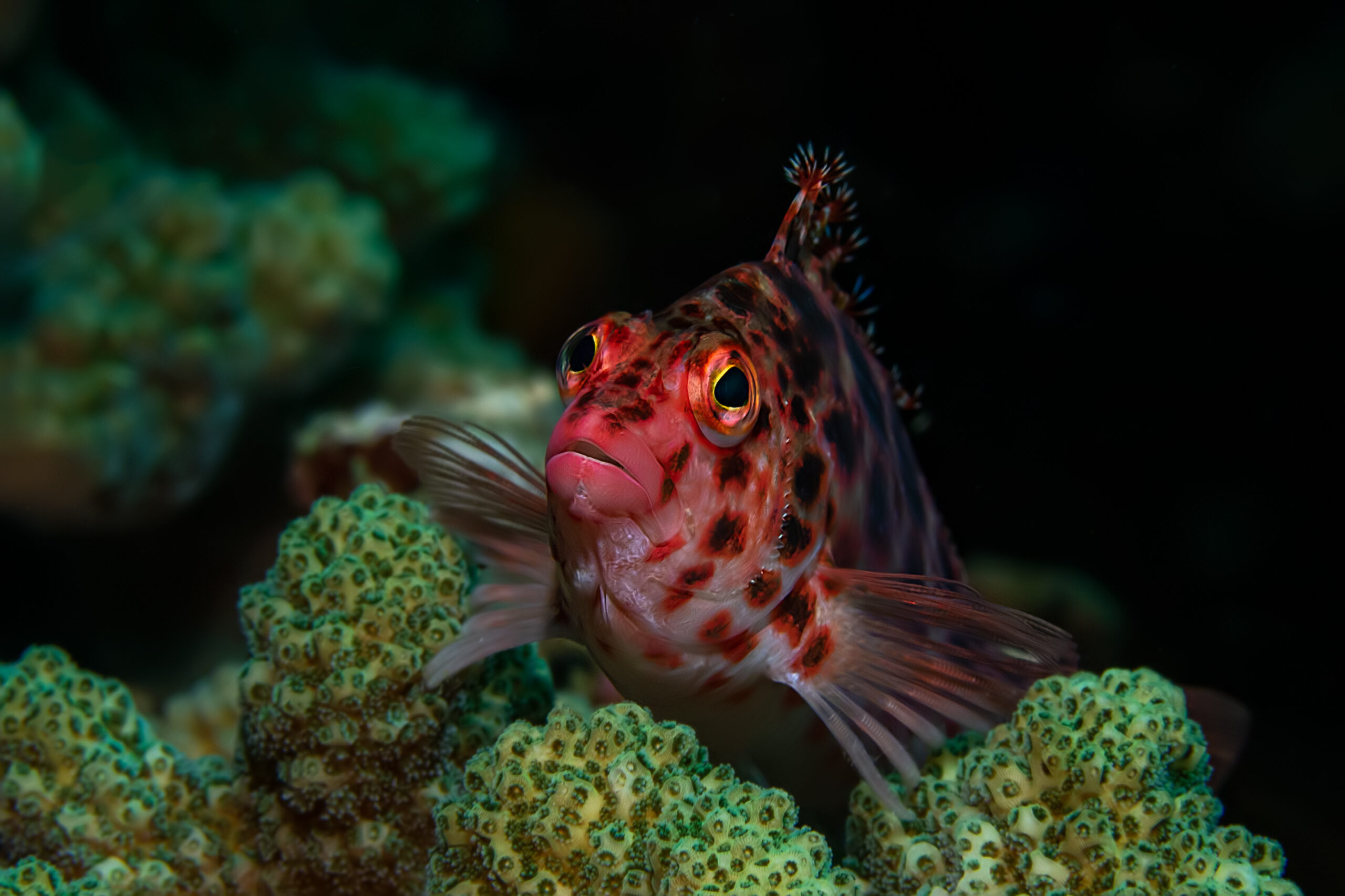
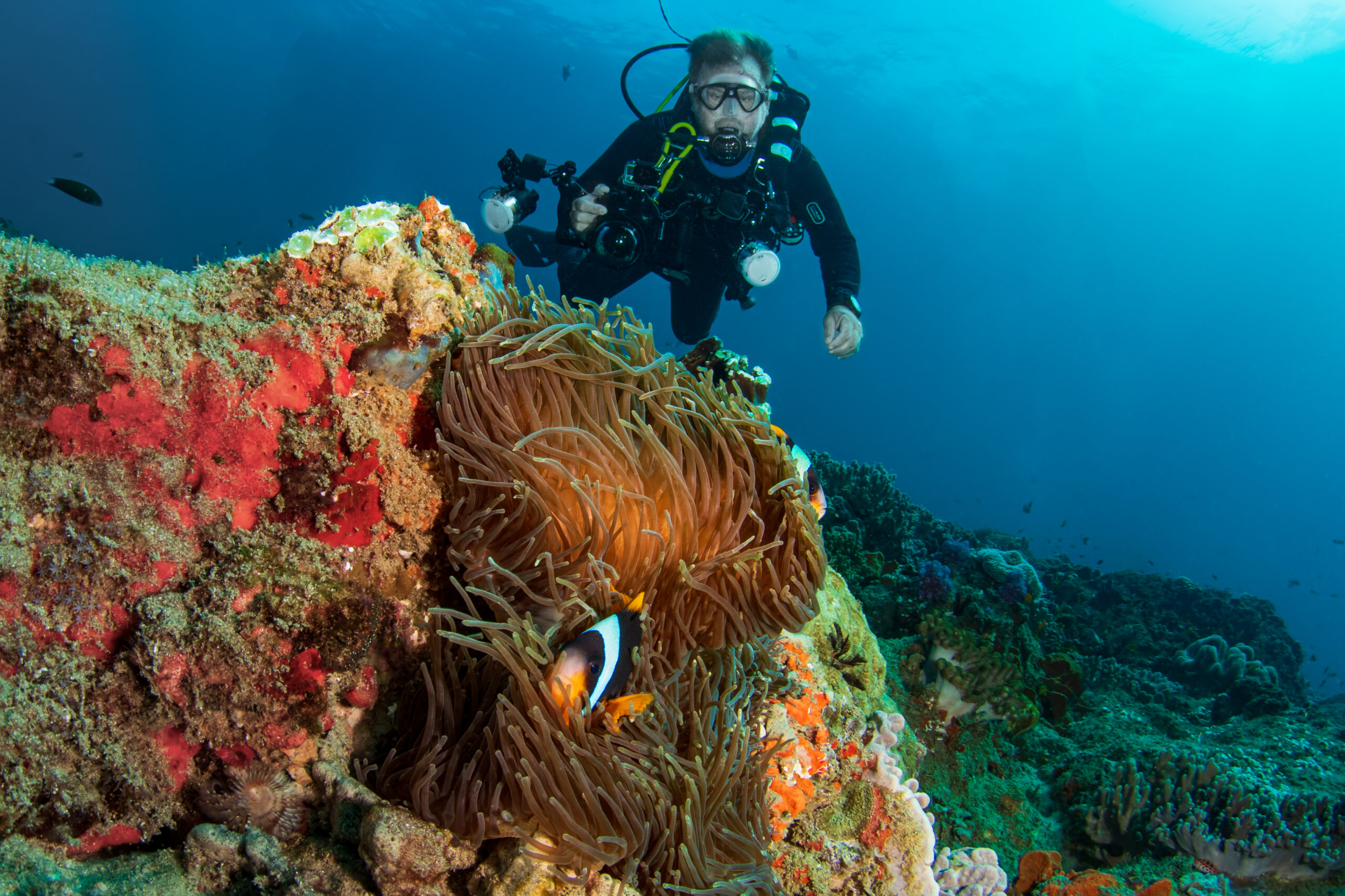
A fisheye lens behind a dome port with two strobes is my first choice for reefscapes, schooling fish and turtles. I also love a mid-range macro zoom behind a compact dome port for close-up portraits of fish, frogfish, eels and turtles.
The same rule applies here as anywhere. Zoom with your fins. Get close, then get closer, because if you can’t touch it, you can’t light it.
Macro photography in Sodwana Bay
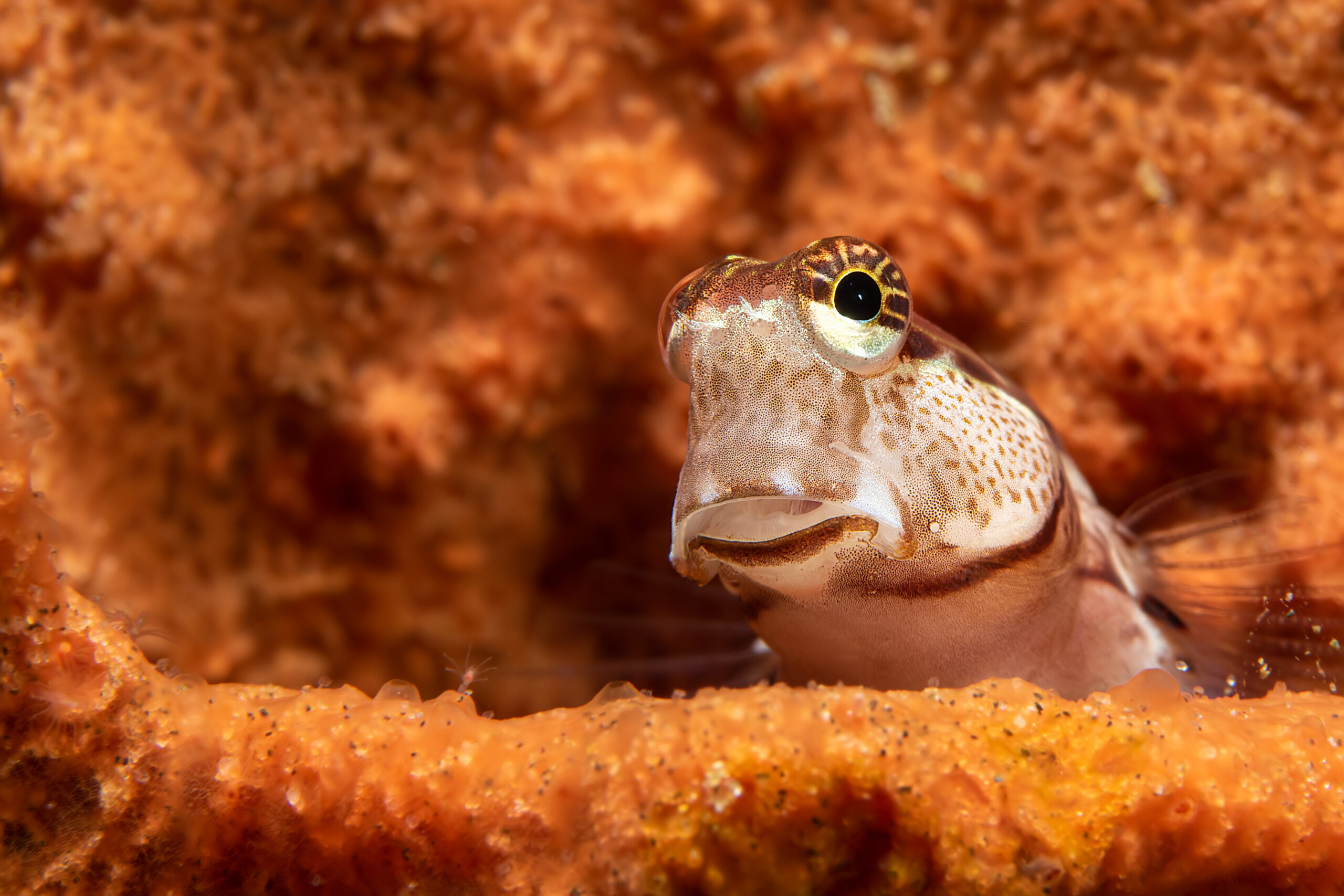
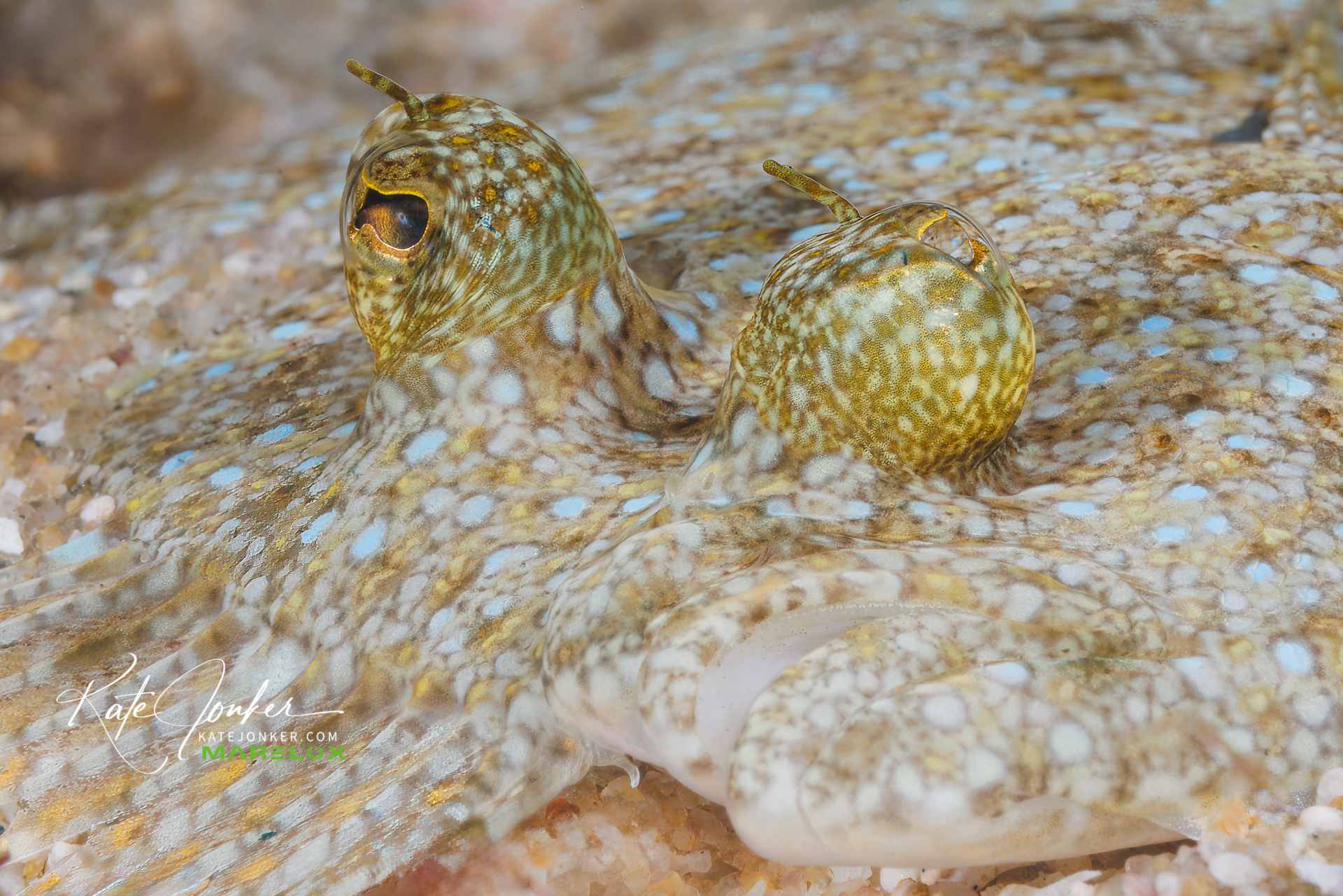
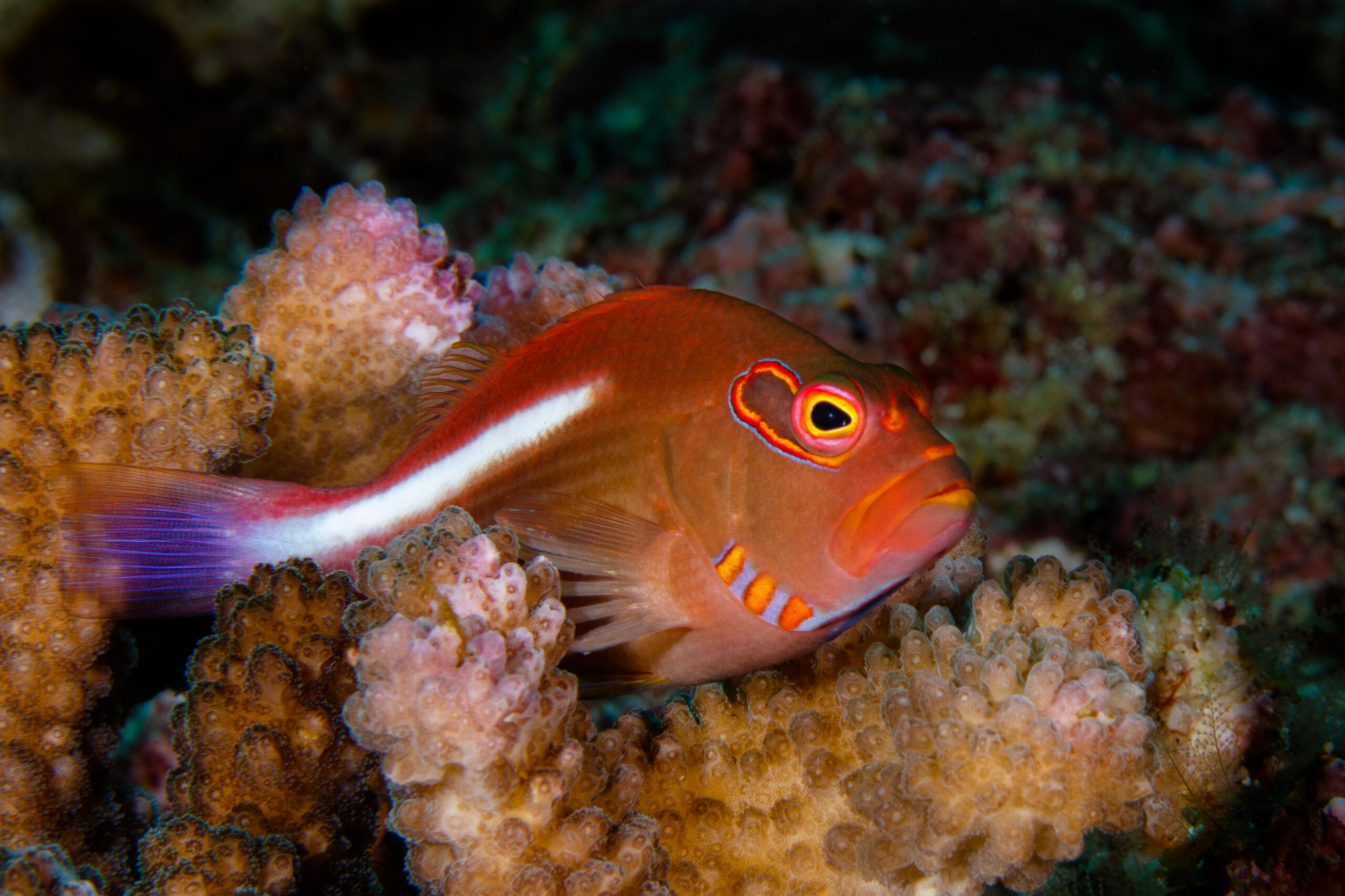
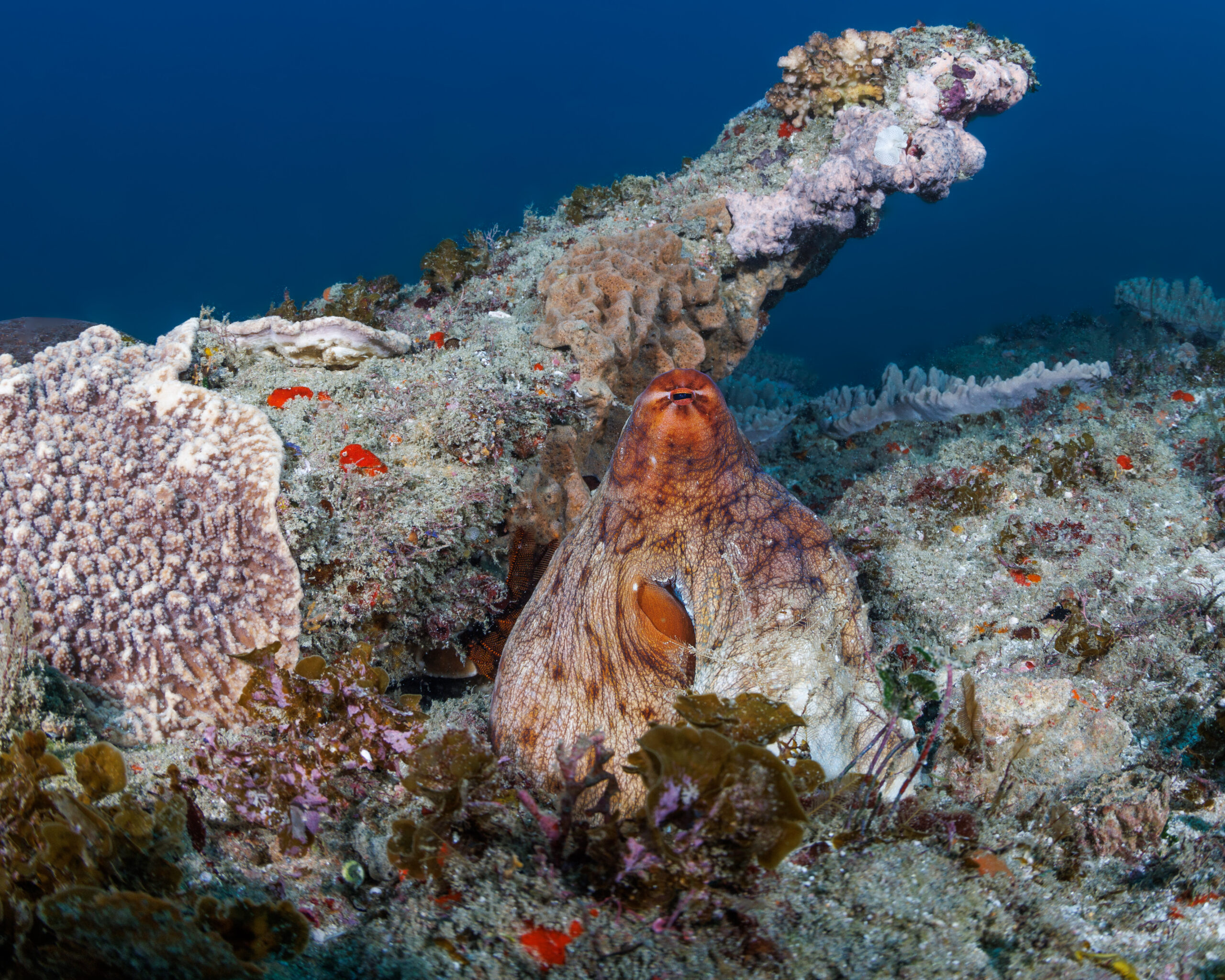
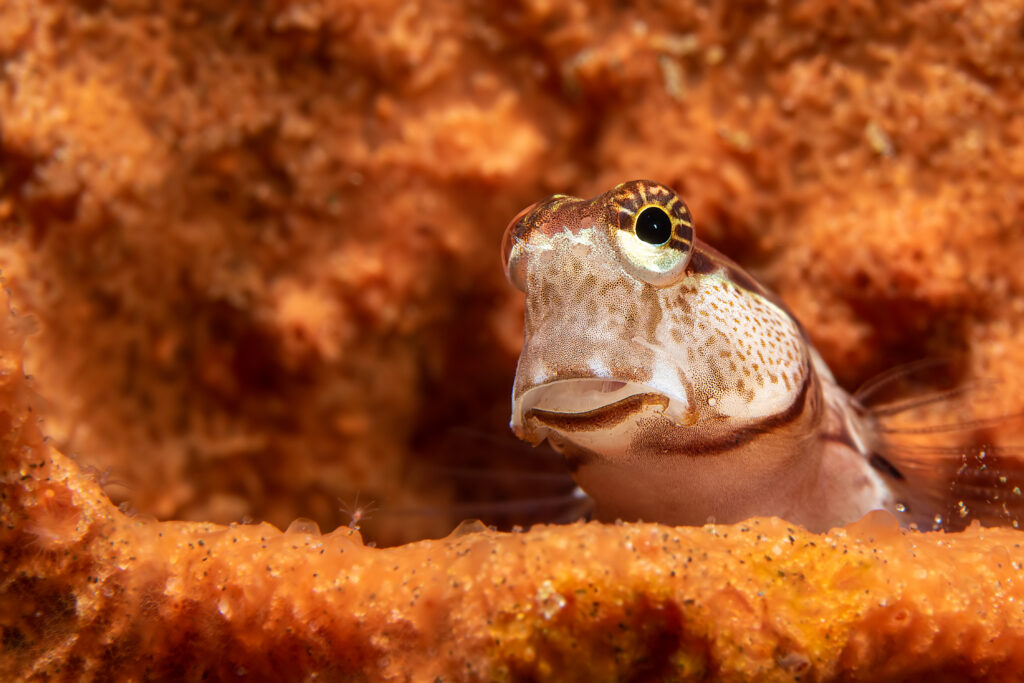
There is plenty here for macro lovers too – blennies, gobies, nudibranchs, flatworms, shrimps, crabs and, if you are lucky, a seahorse or two.
This is not the super macro of Anilao or Lembeh. A 60mm lens on a cropped sensor camera or a 100mm on full frame is your best bet, with a wet diopter on a flip adaptor for the smaller critters you want to fill the frame with.
The reefs are big and the macro life is spread out, so a dive guide who knows where to find it is a must. I shoot with two strobes and attach a snoot to one of them when I find a subject worth making the star of the show. Snooting in open-ocean surge is quite a challenge. The results are worth it.
Planning your trip
- Getting there: Fly into King Shaka International Airport in Durban, then hire a car or arrange a transfer through your resort. The five-hour drive takes you through sugar cane fields, blue gum forests and pineapple plantations, and past game reserves where giraffe, zebra and warthog wander along the roadside.
- Where to stay and dive: I stay at Coral Divers and dive with Amoray Divers. They work together and are inside the wetland park, so there is no queuing at the gate in peak season. A tractor-drawn trailer takes you through the forest to the beach.
- Ask about photographers: Some operators take large groups and their guides cannot slow down. Chat to a few before you book and choose one that is happy to dive at a more stately pace.
- Protect your camera: A padded, waterproof cooler bag with a zip keeps sand and bumps away from your housing on the beach and the boat. It doubles as a rinse tank back in your room, and the larger supermarkets en route sell them cheaply.
- Pack something warm: In May the early morning air was 10°C. Bring a windbreaker or boat jacket for the ride to the beach.
- Book early: Peak seasons fill up quickly.
Is Sodwana Bay worth the trip?
Sodwana Bay gives you wild Africa above the water and a thriving tropical reef below it, and very few places offer both in one trip. Bring your wide angle and your macro lens, dive slowly, and leave the reef exactly as you found it.